Five nights aboard Explora II, 19–24 November 2026
November gives the Mediterranean a different pace. A mild afternoon can be ideal for exploring a city on foot, while wind and rain can change the mood of a harbour in minutes. The days are shorter, but when the sun comes through, it stays low enough to draw out the texture of old stone and cast long shadows across the streets. With fewer visitors than in summer, there’s often more room to linger or wait for a frame to clear. For a trip with a camera, that’s a fair trade for an earlier sunset.
I spent five nights aboard Explora II on an itinerary called A Journey Through Aegean Beauty and Adriatic Heritage. We sailed from Piraeus to Brindisi by way of Mykonos, Dubrovnik and Kotor, with a day at sea between the Aegean and the Adriatic. My first morning, though, belonged to Athens. I started with breakfast in a landmark of the city’s modern architecture and made my way on foot to a nineteenth-century gasworks.
Breakfast in a Modernist Landmark
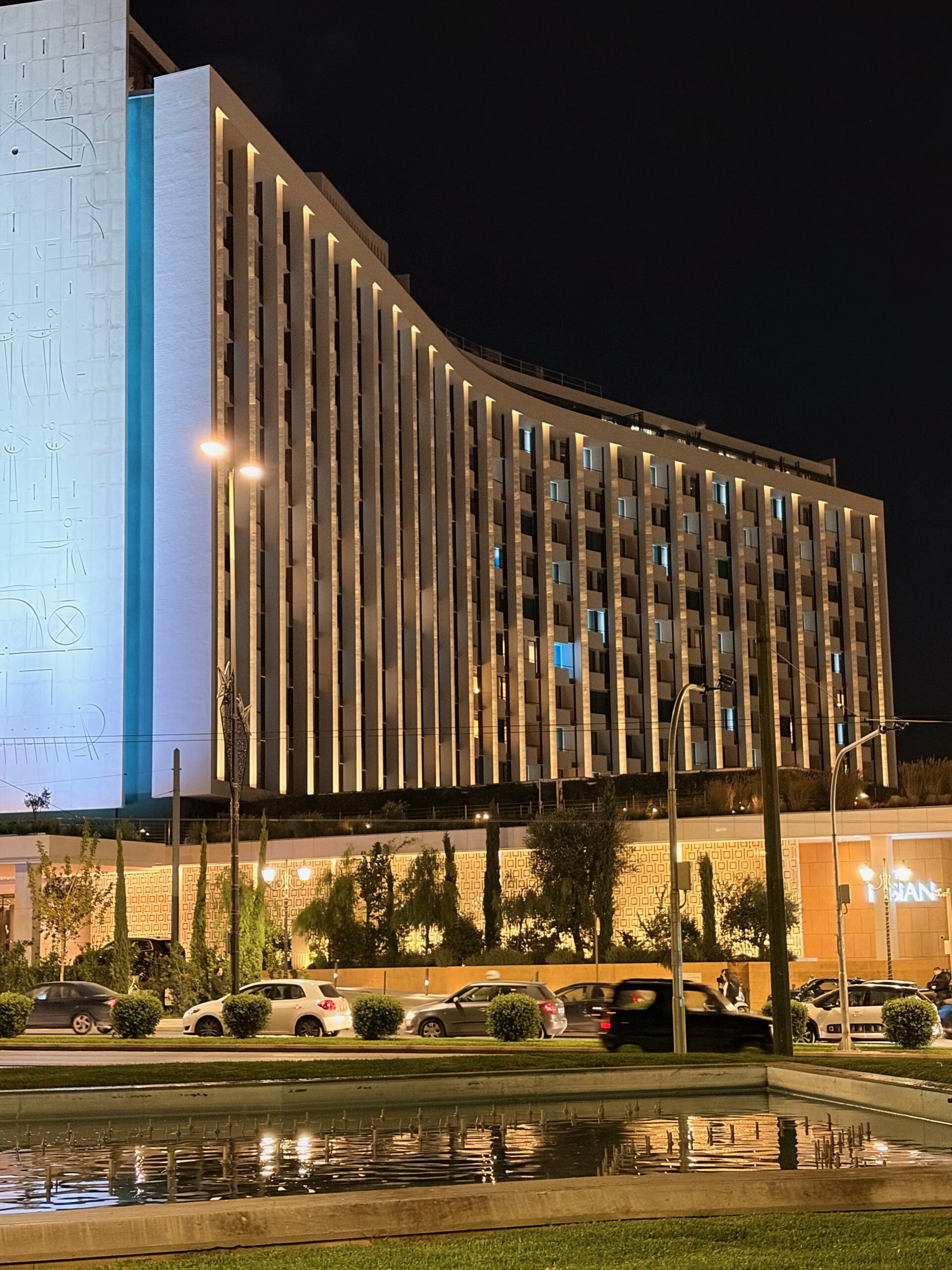
Before heading to the port, I stopped for breakfast at the Byzantino Grand Brasserie in Conrad Athens The Ilisian. The building opened as the Hilton Athens in 1963, at a time when the city was establishing itself as an international travel destination. In April 2026 it reopened as a Conrad, and Byzantino returned as an all-day brasserie. Breakfast was my way into a building I wanted to see for its architecture.
The original hotel was designed by Emmanuel Vourekas, Prokopis Vassiliadis, Anthony Georgiades and Spyros Staikos. From a distance, the long sweep of the building and the repeated lines of its balconies give it a distinctly modernist profile. Up close, the marble reliefs by the Greek artist Yiannis Moralis reward a slower look. He reduced references to ancient Greek art to spare, geometric forms, letting the carving catch the light and cast shadows of its own. I like the way the building uses a material so closely associated with classical Athens to do something unmistakably twentieth-century.
On Foot from Syntagma to Kerameikos
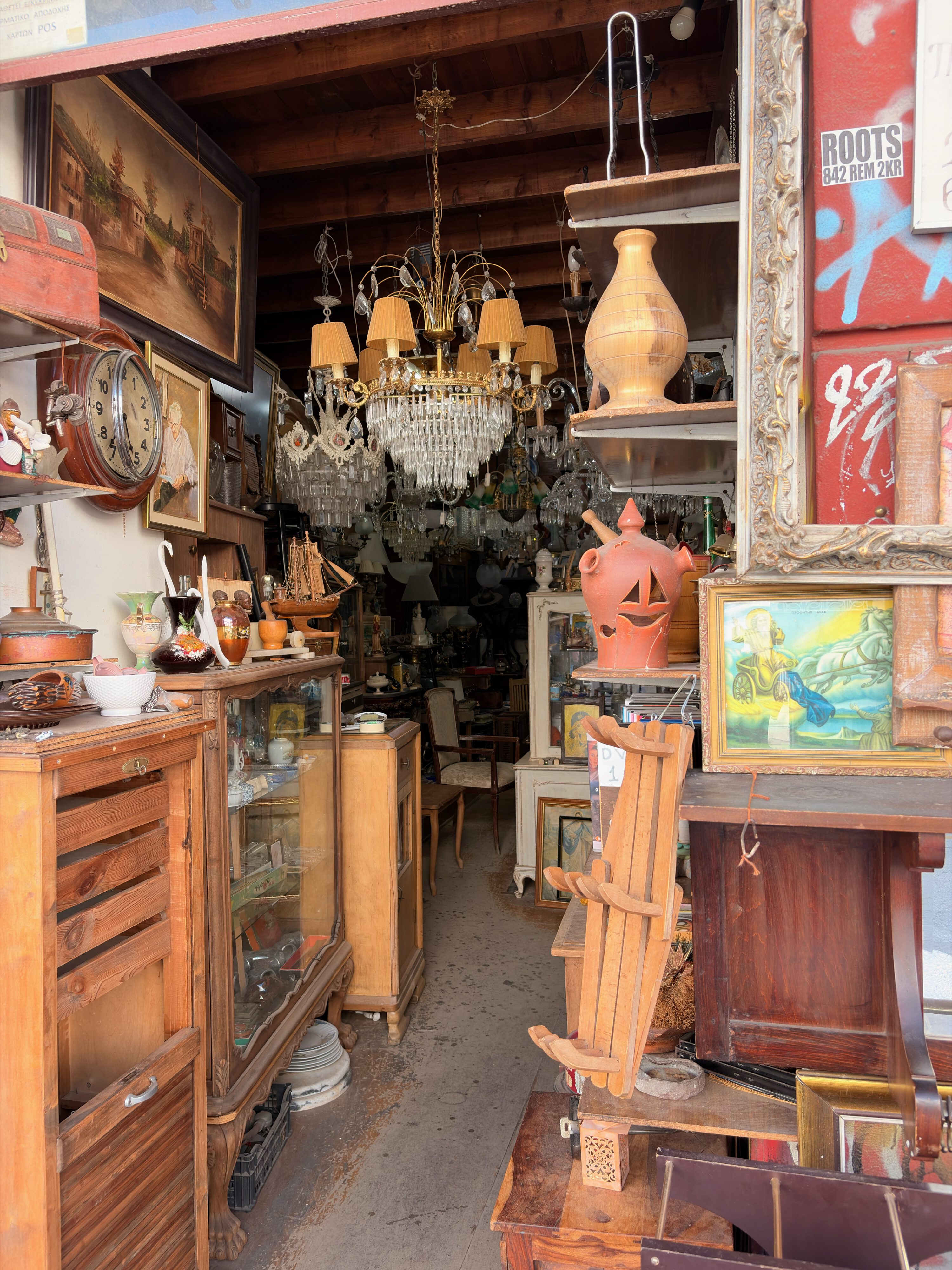
After breakfast, I headed down Vasilissis Sofias Avenue, past Syntagma Square and into the smaller streets of Psyri. The scale of the city changed along the way. The broad avenue and the formal sweep of Syntagma gave way to little antiques shops, the kind that draw your eye into a window even when you have somewhere to be. After looking up at an entire façade, I found myself looking at Athens one shopfront at a time.
By the time I reached Gazi, the chimneys of the old Athens gasworks had taken over the skyline. The plant once supplied gas for the city’s streetlights, including those in Syntagma Square, which I’d just walked past. It closed in 1984 and reopened as Technopolis, a cultural venue that now houses the Industrial Gas Museum. It also hosts the Christmas Factory, which was due to open two days after my walk. There’s something rather apt about a place built to light the streets of Athens becoming the setting for its Christmas lights.
Kerameikos was the end of my walk. From there, the morning in Athens gave way to the next part of the journey as I headed for Piraeus and boarded Explora II.
Aboard Explora II
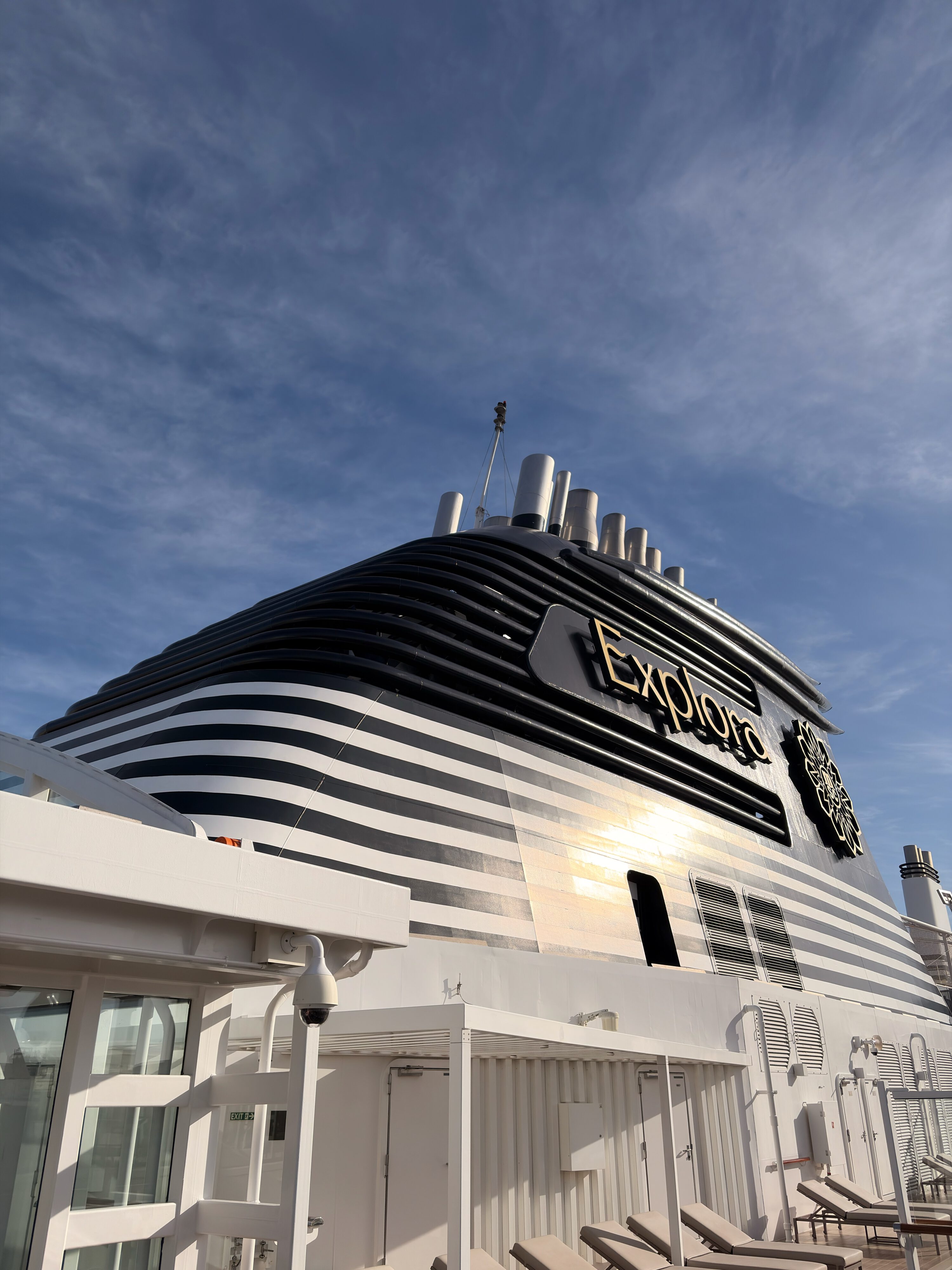
I’d spent the morning walking across Athens, and by the time I reached Piraeus I was ready to put my feet up. There was no queue at the terminal, and I was on board within minutes. Better still, Piraeus was bathed in sunshine. I’d gone into this trip knowing how changeable the weather could be in November, so I made the most of it and spent much of embarkation day out on deck.
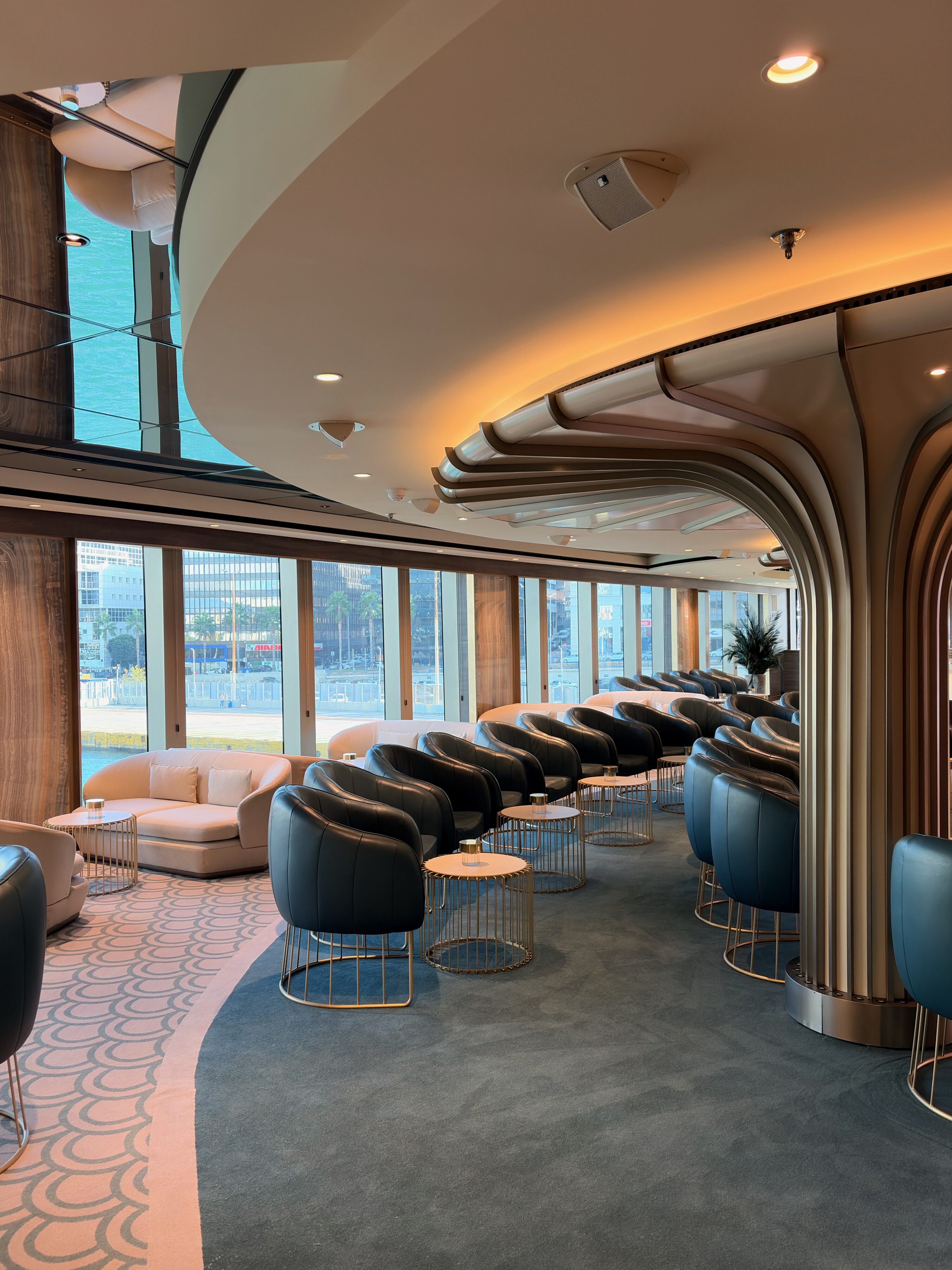
Explora II has the feel of a contemporary hotel, especially in the way its public spaces are laid out. There are lounges with seats by the windows, places to sit over coffee and several ways to step outside. The ship’s design makes room for the view, something I appreciated just as much in my suite as on the upper decks.
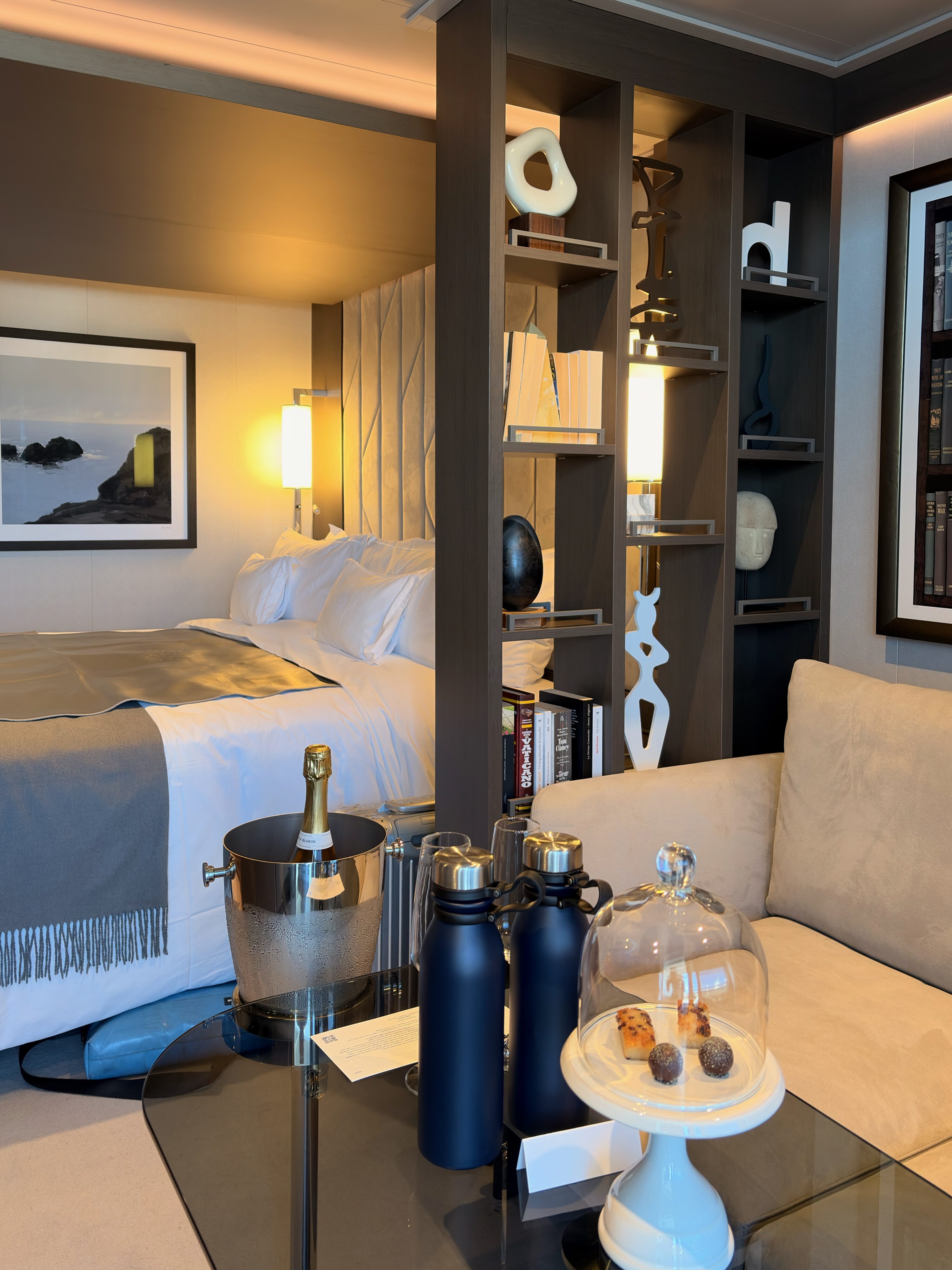
My Ocean Terrace Suite had floor-to-ceiling windows and a private terrace with a table and a daybed. The suite itself was thoughtfully laid out, with a sitting area and a separate walk-in wardrobe, but it was the terrace that gave it its character. There was room to stretch out or sit at the table with a coffee, and even from inside the suite, the view felt like part of the room.
Dining On Board
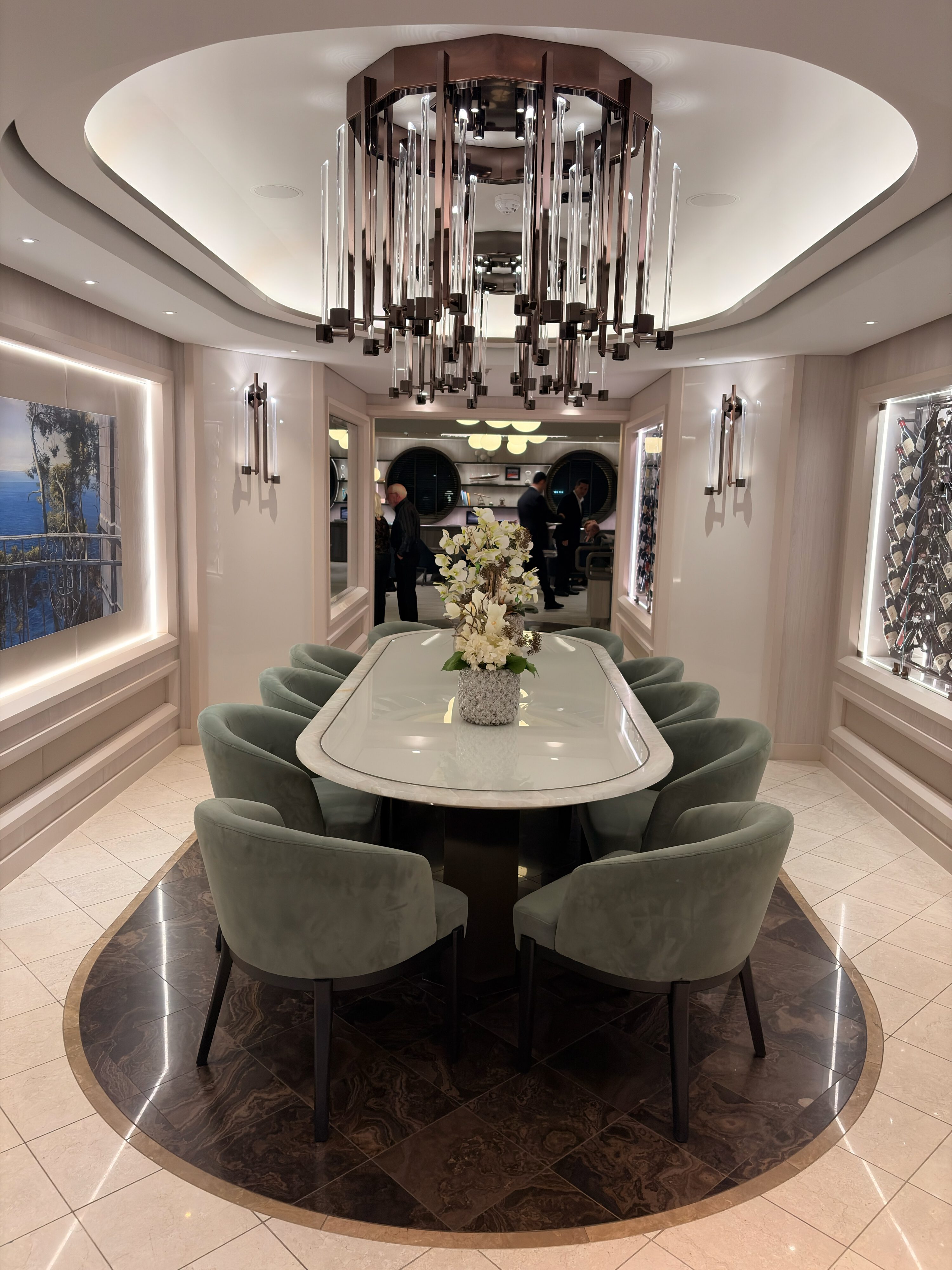
What I liked about dining on Explora II was the range of ways to eat. Emporium Marketplace has an easy, come-as-you-are feel, with different counters and outdoor tables. Dinner could take a more leisurely turn at Sakura, with its pan-Asian menu, or at the Med Yacht Club, where the cooking looks to the Mediterranean. Each has a different atmosphere, so choosing where to eat is as much about the sort of evening you’re in the mood for as it is about the menu.
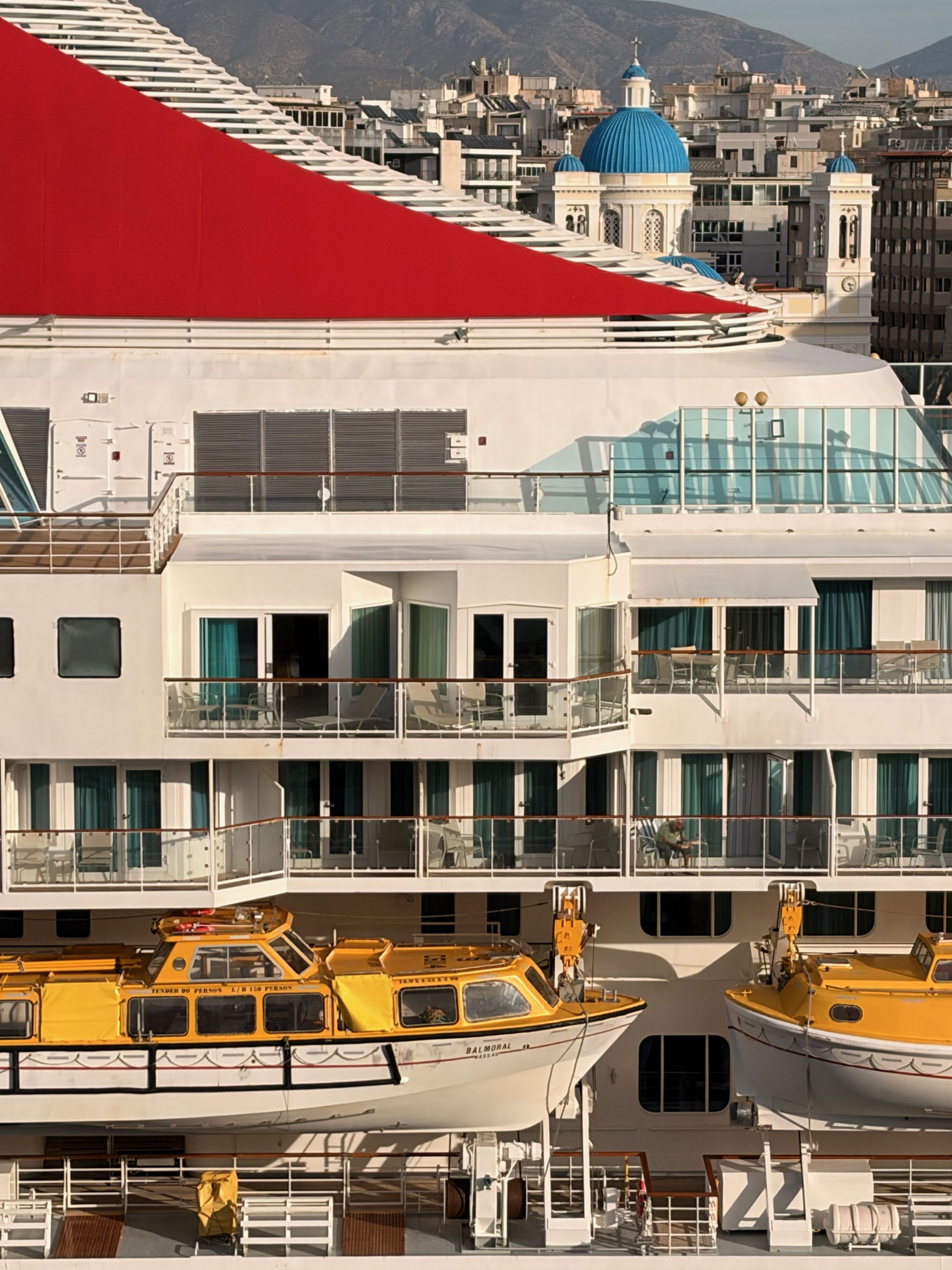
A November Afternoon on Deck
The outdoor spaces are spread across several decks, from the Astern Pool at the back of the ship to the adults-only Helios Pool and the Sky Bar on Deck 14. That gives you a choice of vantage points even before the ship has left port. After a morning spent looking up at buildings and into shop windows, I was happy to do very little for a while. Piraeus was still right there, and I had a sunny November afternoon to enjoy it from the deck. Mykonos could wait until morning.
Mykonos in the November Light
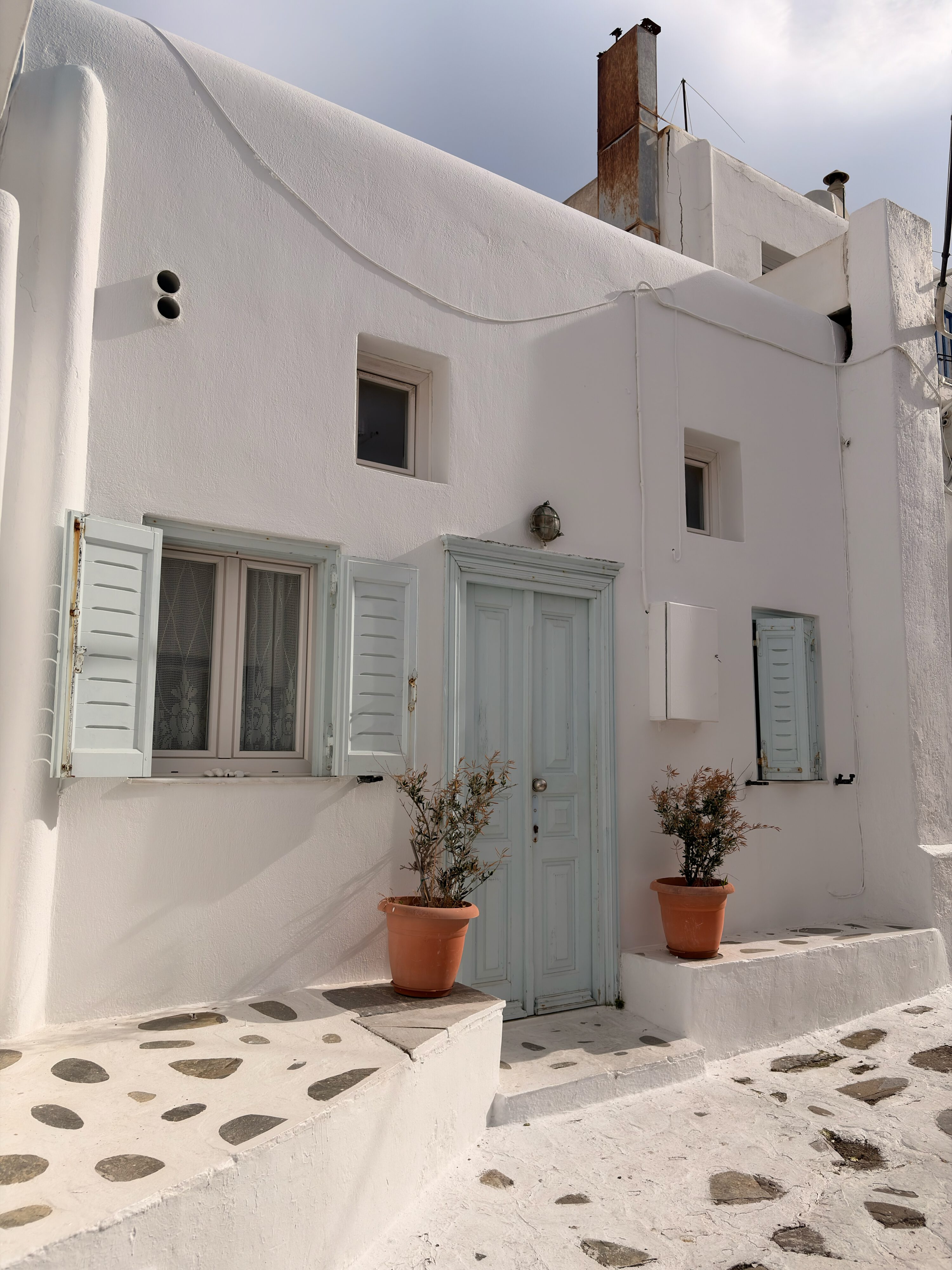
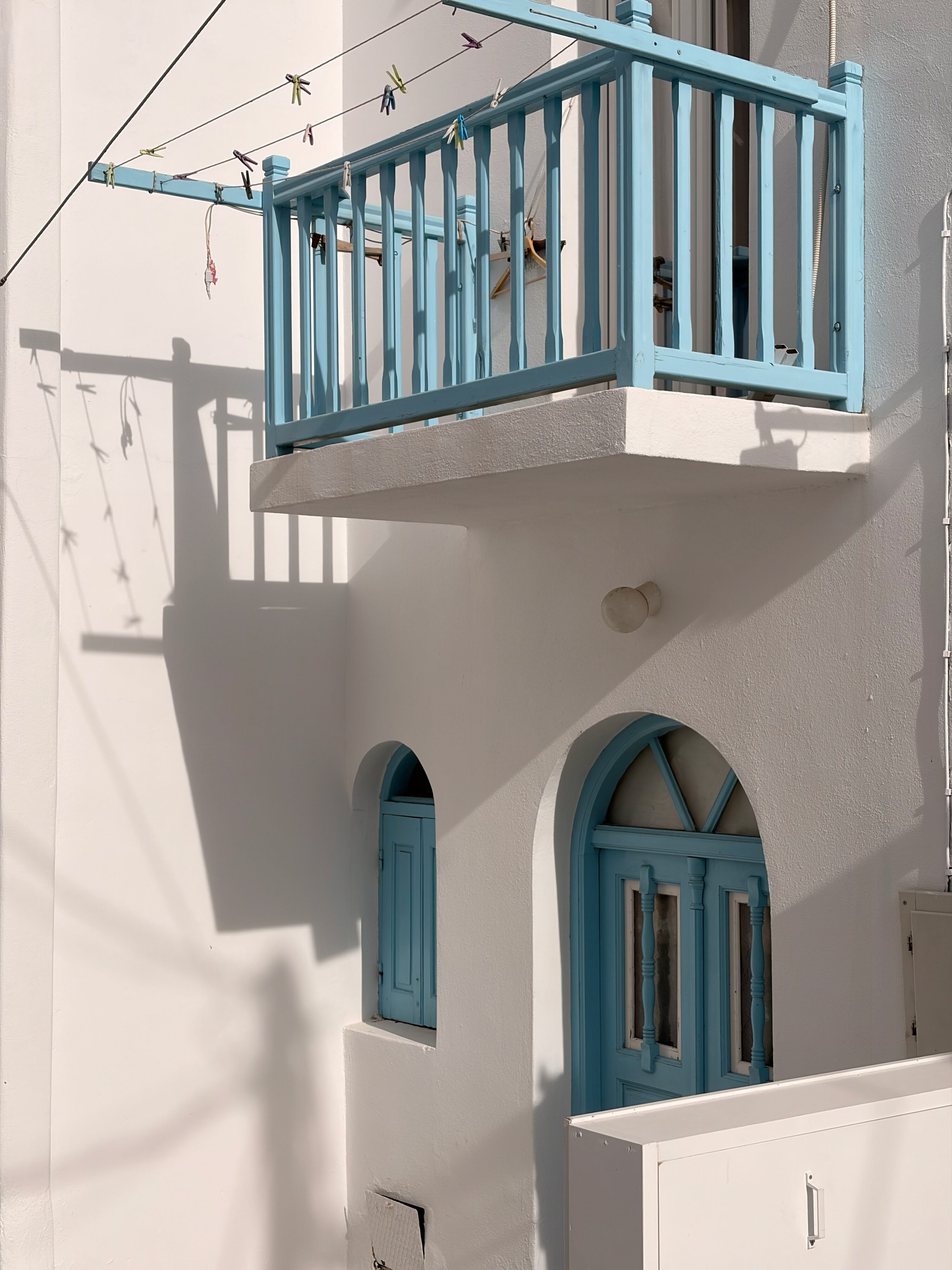
What I remember most about Mykonos is the light. It was soft enough to bring out the texture in the whitewashed walls, and the shadows were as much a part of the scene as the buildings themselves. I kept finding photographs in ordinary things. A flight of steps, a painted door or the shadow falling across it was enough to make me stop.
From the Old Port to the Windmills
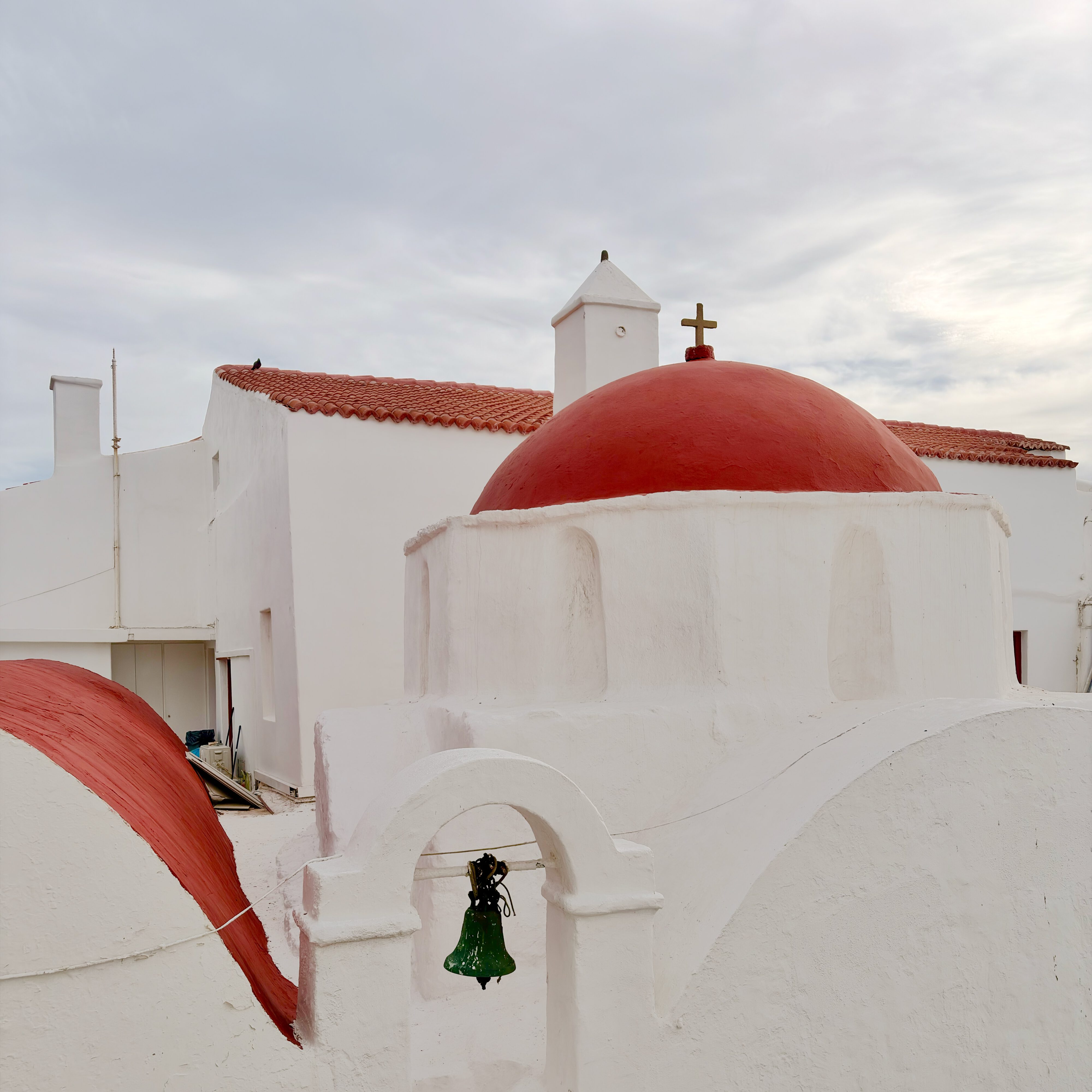
I started at the car park by the Old Port and followed the waterfront to Panagia Paraportiani. The church was the first place I wanted to spend some time with the camera. Its rounded walls and overlapping white forms changed depending on where I stood. From one angle, I could pick out the individual curves. A few steps further on, they seemed to merge into a single shape. I walked around it slowly, photographing it from several perspectives before carrying on along Little Venice.
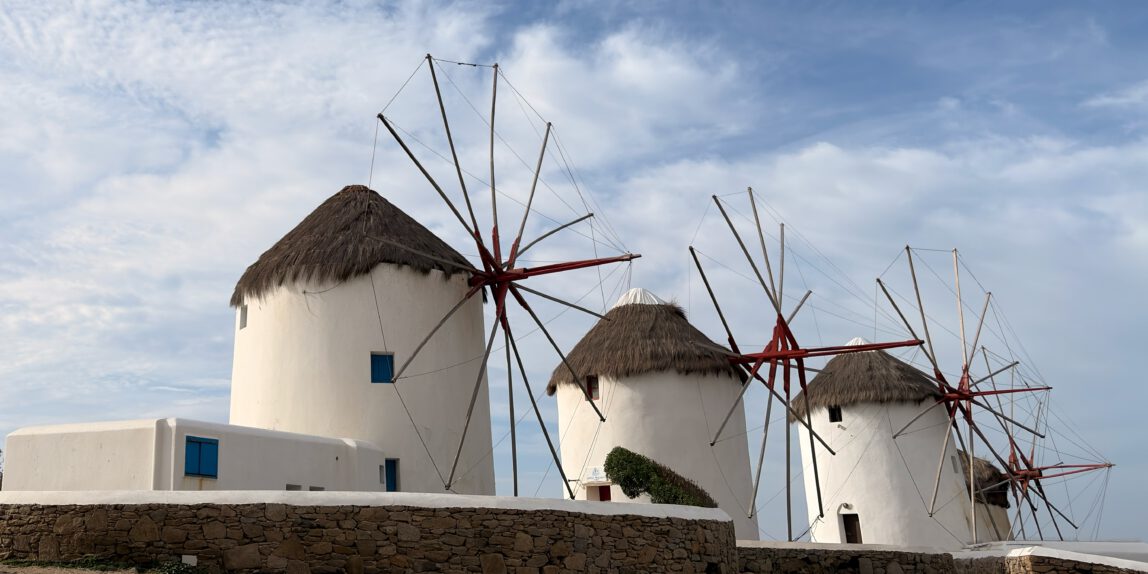
From there I made my way up to the Kato Mili windmills. I stayed a while, taking photographs and shifting my position to see how the sails, the white towers and the spaces between them changed the composition. Then I headed back into town and let myself get lost in the lanes.
Getting Lost in the Streets
Explora II was the only cruise ship in port that day. There were hardly any people in the lanes and most of the shops and bars were closed. I could stop in the middle of a passage, take my time over a photograph and double back whenever a doorway caught my eye.
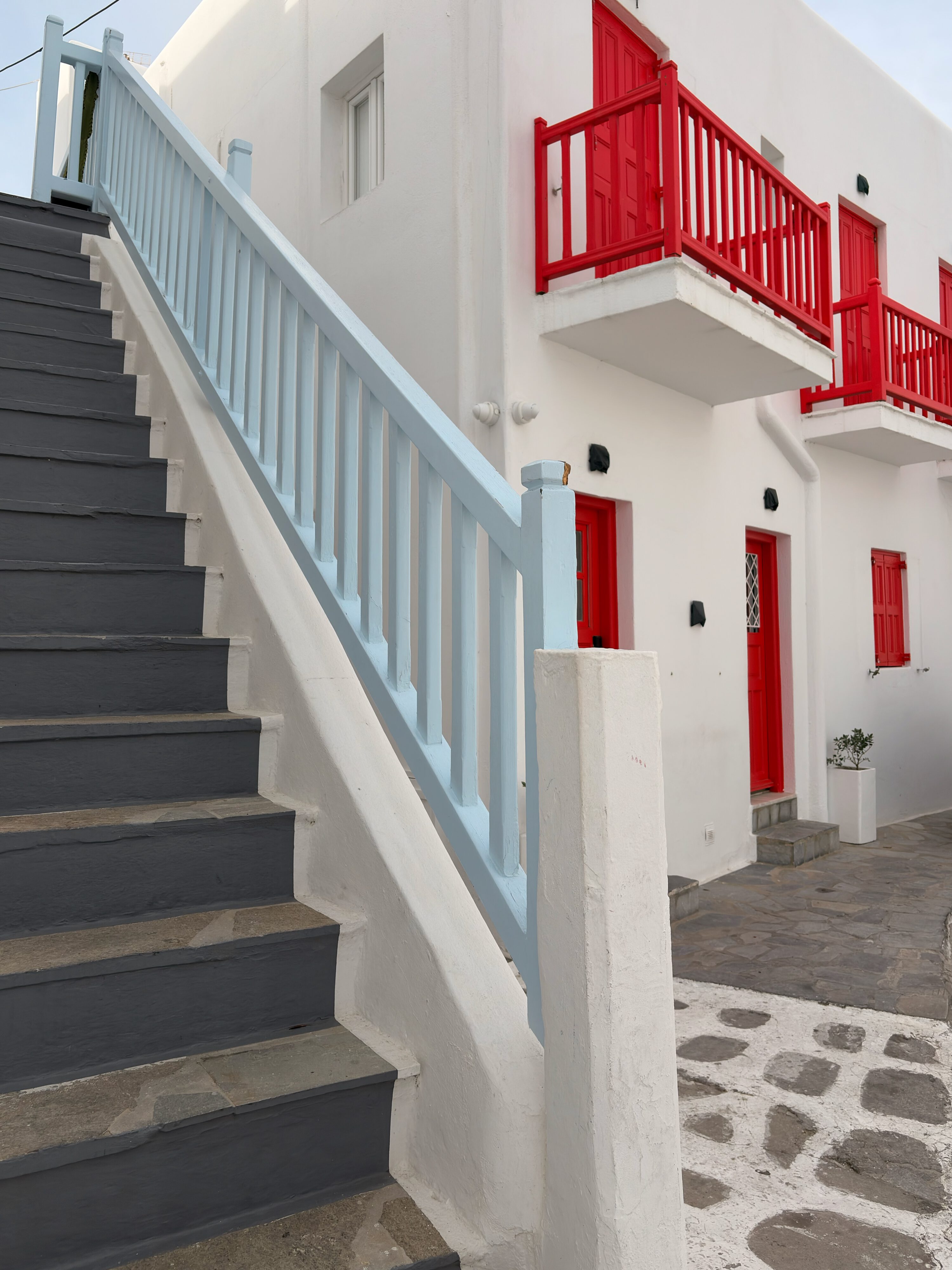
I’d pictured Mykonos in white and blue. There was plenty of both, but once I started paying attention, I noticed how many other colours appeared on the shutters, doors and staircases. A turn into the next lane might bring a different shade of paint, a new pattern underfoot or a shadow cutting across a wall. Sometimes the colour caught my eye first. Sometimes it was the shadow, and I only noticed the colour once I’d stopped.
I spent much longer in those lanes than I’d expected. There always seemed to be one more corner worth turning. By the time I headed back to the ship, I had a camera full of photographs and the happy feeling that I’d spent the day exactly as I wanted to.
Dinner at Fil Rouge
After an afternoon spent getting lost in the lanes of Mykonos, I was ready to sit down and let the evening unfold. I’d booked dinner at Fil Rouge, where I started with a grilled duck foie gras escalope, followed by Black Angus beef short rib, slow-braised for 72 hours. I finished with the Fil Rouge signature mousse, made with 70% Weiss dark chocolate. A wonderful Cabernet Sauvignon accompanied the meal. The service was excellent, and the room had the relaxed feel that makes you want to stay a little longer.
My one quibble is admittedly a tiny one. I’m left-handed, so I always swap my knife and fork. In a perfect world, someone would notice the little rearrangement after the first course and set the cutlery the other way round for the second. When that’s the only thing you can find to complain about, you’ve had a very good dinner.
From the Explora Lounge to the Lobby Bar
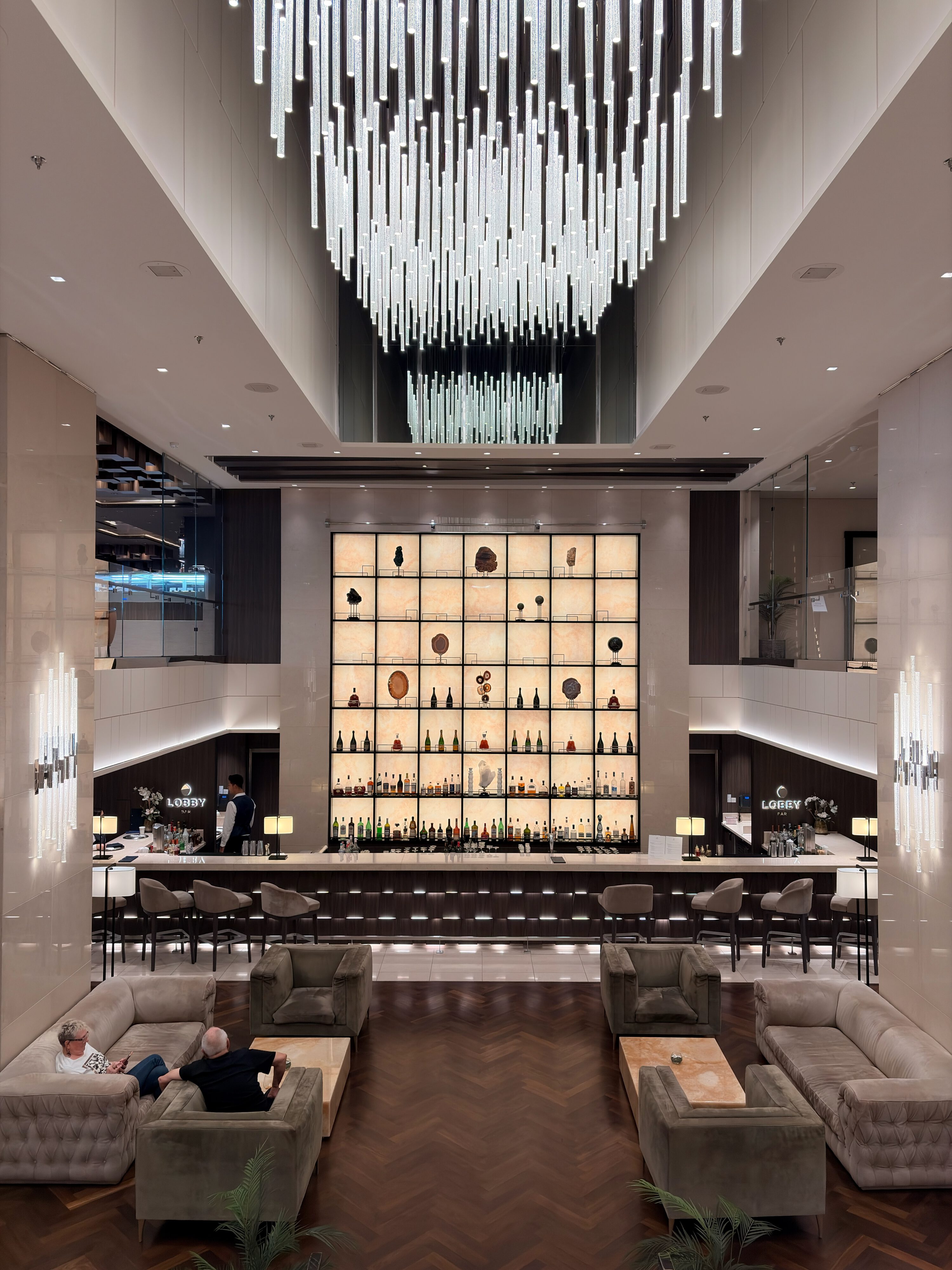
After dinner I went to the Explora Lounge for the evening show. A wonderful West End performer was on that night, and I wish I’d made a note of the name. I ended the evening in the Lobby Bar, swapping stories with other guests. I’d spent much of the day looking for quiet corners in Mykonos. It was lovely to finish it hearing what other people had made of the same stop.
A Day at Sea
The next day, as we sailed towards Dubrovnik, the weather was beautiful again. I spent much of the day out on deck and finally had time to go through my photographs from Athens and Mykonos. There’s a pleasure in doing that while the places are still fresh in your mind. A photograph of a painted doorway would bring back the turn I’d taken to reach it, or the way the shadow had fallen across the steps. I went back and forth between editing the pictures and simply looking through them, retracing both walks from my seat on deck.
That evening I had a wonderful dinner at the Med Yacht Club before returning to the Explora Lounge for another show. Afterwards, the captain came out to welcome us. It was a lovely way to end a day I’d been happy to take at my own pace. The following morning, there would be another city to explore, and my camera would be coming out again.
Dubrovnik After the Rain
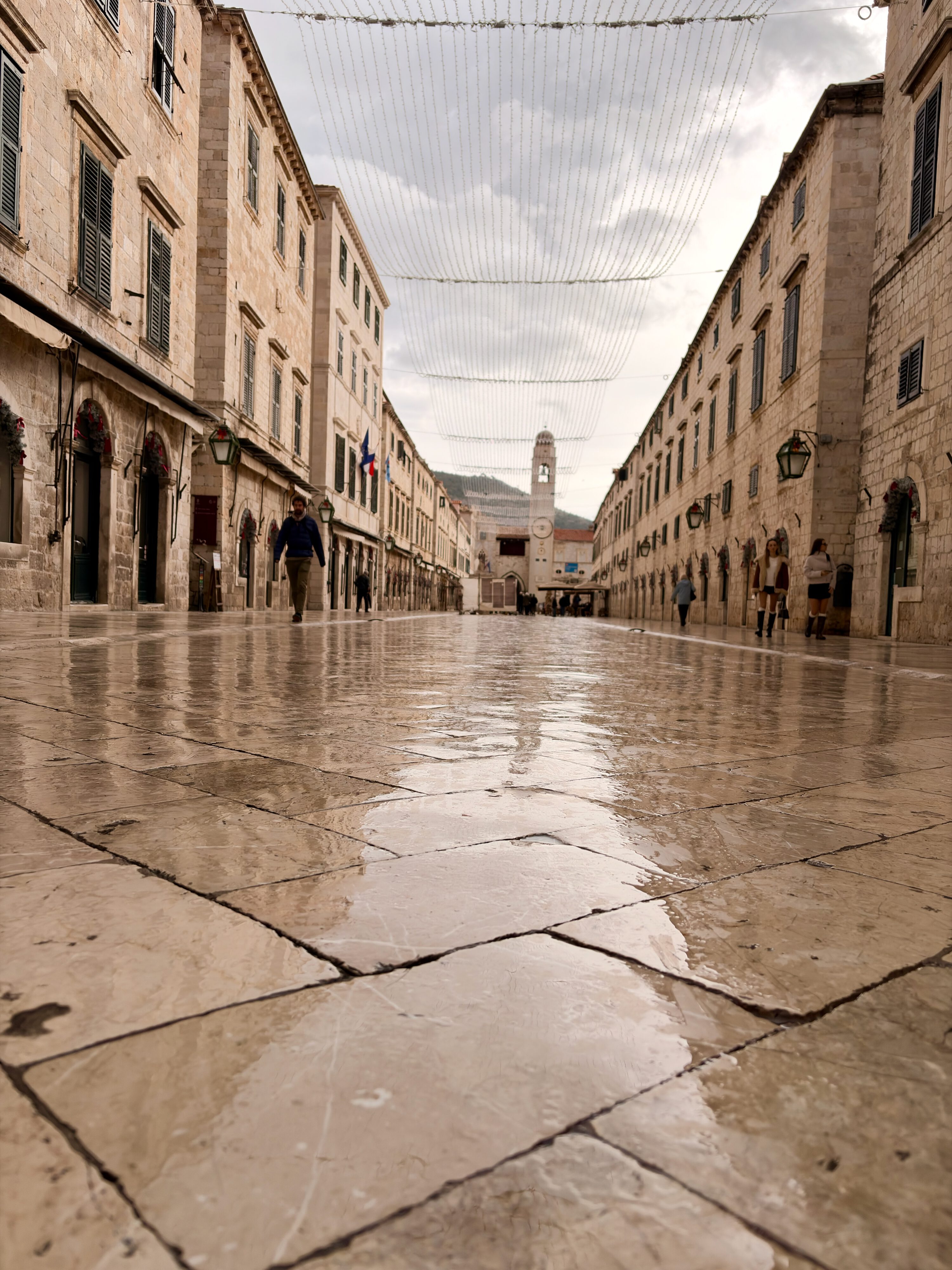
Explora II was the only cruise ship in port again, and the Old Town was quiet when I came through Pile Gate. A little rain had left the Stradun gleaming. The smooth limestone can be surprisingly slippery when it’s wet, so I watched my footing and took my time. The upside was that I got to see the street in a different light, with the pale façades reflected in the pavement.
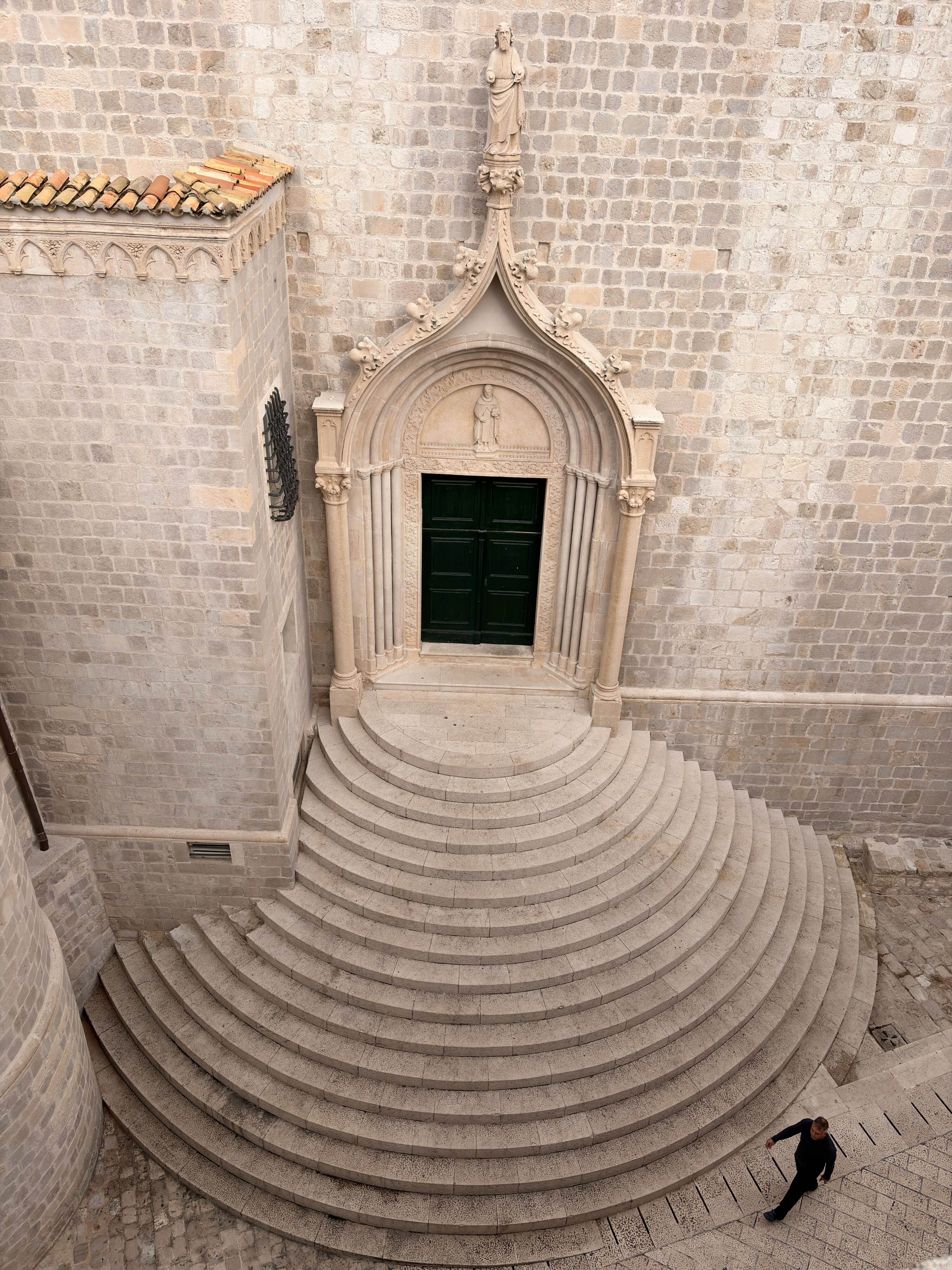
Above the Old Town
I followed the Stradun to the Old Harbour, then found the entrance to the city walls near St John’s Fortress. From there I set off towards Minčeta Tower. One of my favourite views along the way was down onto the steps of the Dominican Monastery. Seen from above, the pale stone treads fan out in a series of curves below an arched doorway. The sweep of the staircase stands out against the straight walls and tight angles of the surrounding buildings. The steps also doubled as part of King’s Landing in Game of Thrones. In an early scene, Tyrion and Bronn pass by as a speaker denounces King Joffrey.
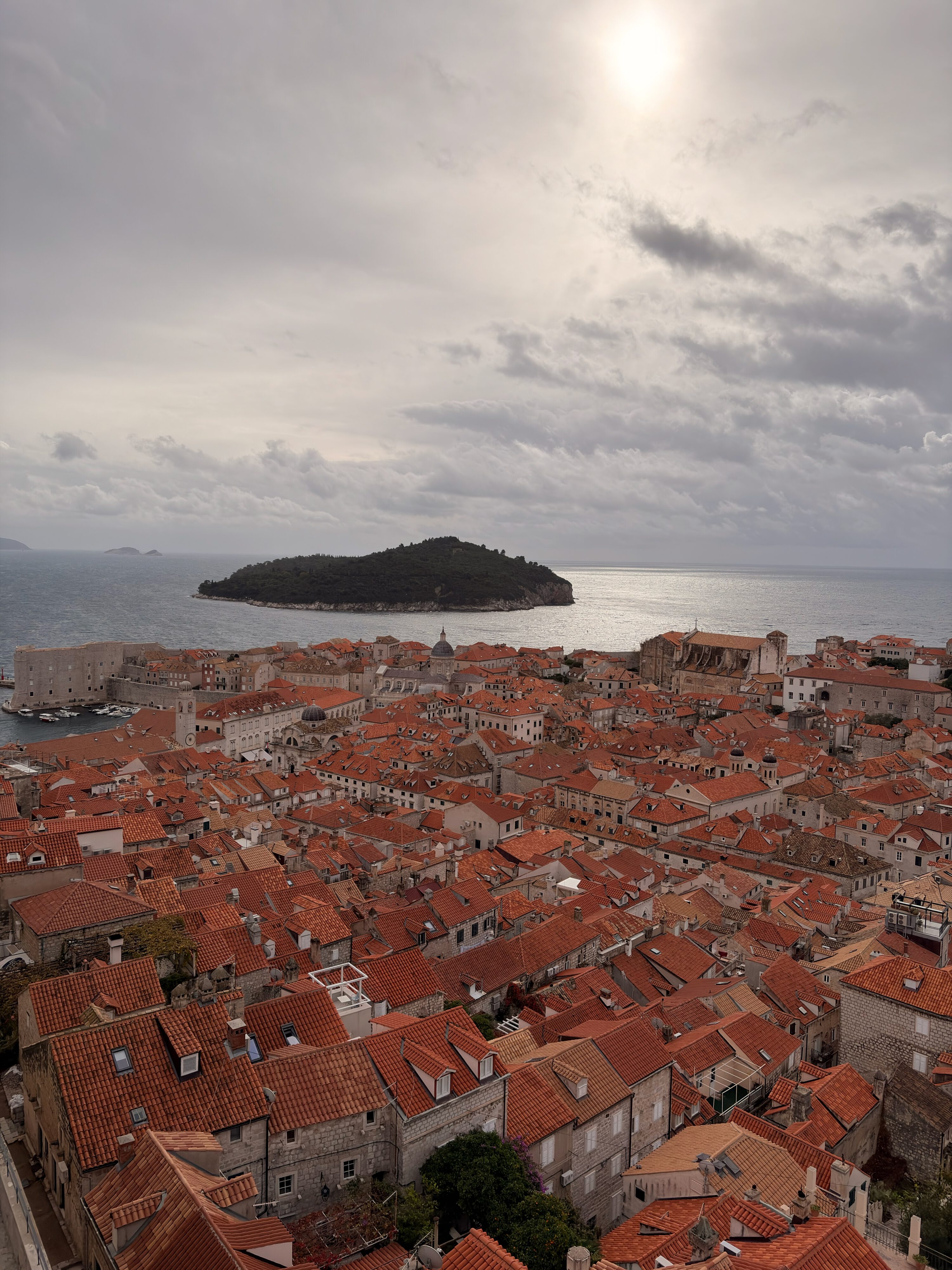
The walk kept drawing my eye back and forth between the rooftops and the narrow side streets dropping steeply towards the Stradun. Some of my favourite views were straight down those lanes, where the steps seemed to run almost uninterrupted between the houses. Then I reached Minčeta, the highest point on the walls, just as the clouds parted and the sun came through. From there the whole Old Town opened up below me. Terracotta roofs filled the foreground, with the cathedral dome rising above them and the walls tracing the edge of the city. Beyond the harbour, across a strip of Adriatic blue, lay the wooded island of Lokrum. After looking down into one steep lane at a time, I could suddenly see how the whole city fitted together.
The Jesuit Steps, All to Myself
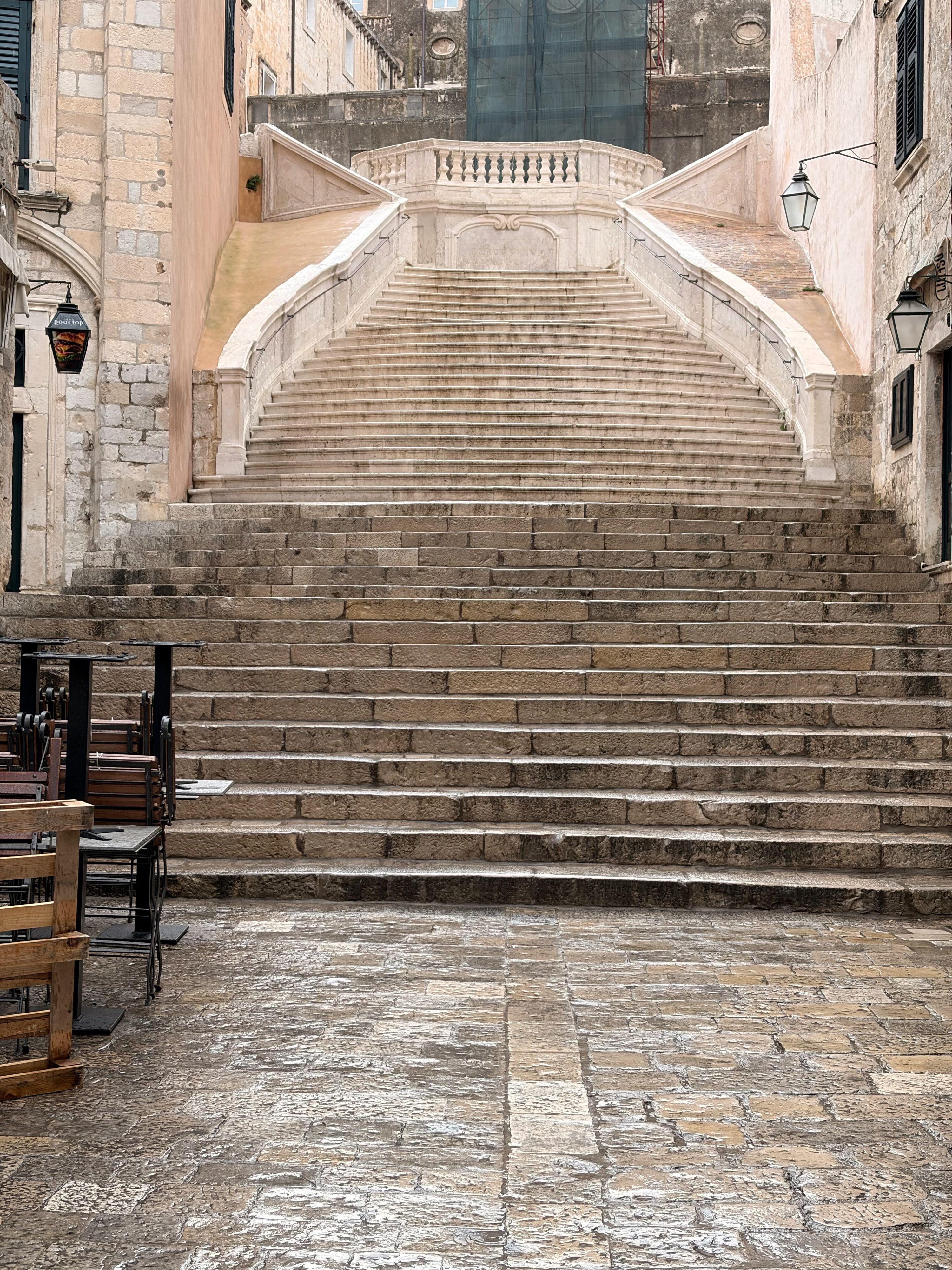
I came down from the walls at Pile Gate and walked along the Stradun again, this time turning off towards the Jesuit Steps. The Roman architect Pietro Passalacqua designed the staircase in 1738, taking his cue from the Spanish Steps in Rome. Its broad, curving flights connect the lower town with the square in front of the Church of St Ignatius and the former Jesuit college. Standing at the foot of the stairs, I could see how the curves draw your eye upwards and make the climb part of the approach to the church. Centuries later, those same steps gave Game of Thrones one of its most recognisable backdrops, as the starting point of Cersei Lannister’s walk of shame. That morning, I had them entirely to myself for a photograph.
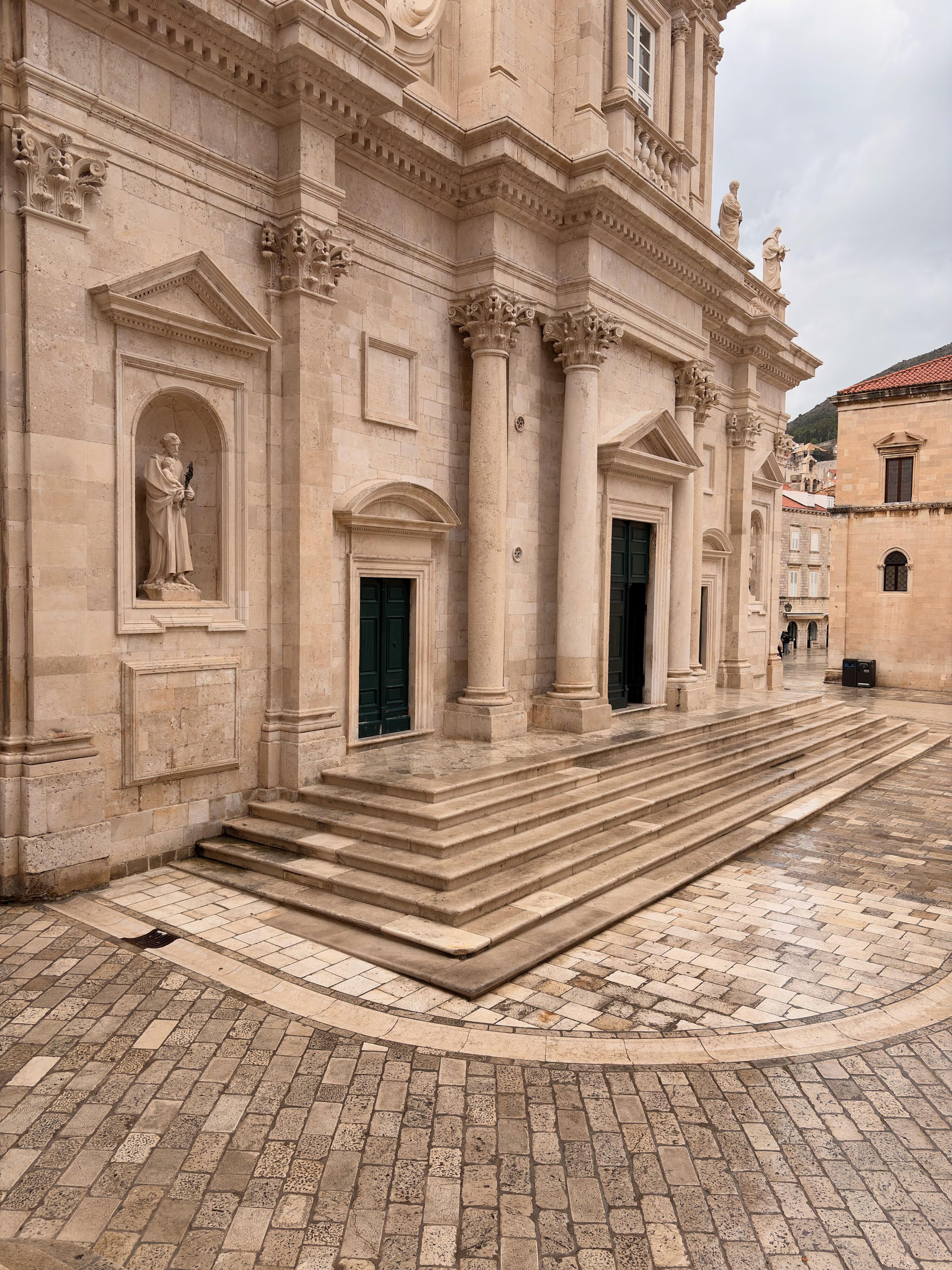
I carried on to the cathedral, where I found another impressive staircase and, once again, nobody in the frame.
The cathedral was one of the Republic of Dubrovnik’s major rebuilding projects after the earthquake of 1667 destroyed the Romanesque basilica that stood here. The Italian architect Andrea Buffalini drew up the Baroque design, and the local master builder Ilija Katičić completed it in 1713. Inside, the nave leads towards the dome, which rises above the point where the nave and transept meet. Above the high altar is a sixteenth-century polyptych of the Assumption of the Virgin, attributed to Titian and his workshop. The building has an older story beneath it, too. During restoration after another earthquake in 1979, archaeologists uncovered the remains of a church that predated even the Romanesque cathedral.
A short walk away, the Church of St Blaise faces the Stradun at Luža Square. Its medieval predecessor survived the earthquake and even served as Dubrovnik’s temporary cathedral, before a fire destroyed it in 1706. The city’s Senate commissioned the Venetian architect and sculptor Marino Gropelli to build the church that stands today, completed in 1715. Where the cathedral draws you along a long nave, Gropelli’s church gathers around a central dome, with the arms of a Greek cross extending from it. On the high altar stands a gilded silver statue that survived the fire. St Blaise holds a tiny model of Dubrovnik, giving a glimpse of the city he was believed to protect before the earthquake changed its skyline. He remains Dubrovnik’s patron saint, and the annual procession on 3 February is part of a festival recognised by UNESCO as intangible cultural heritage.
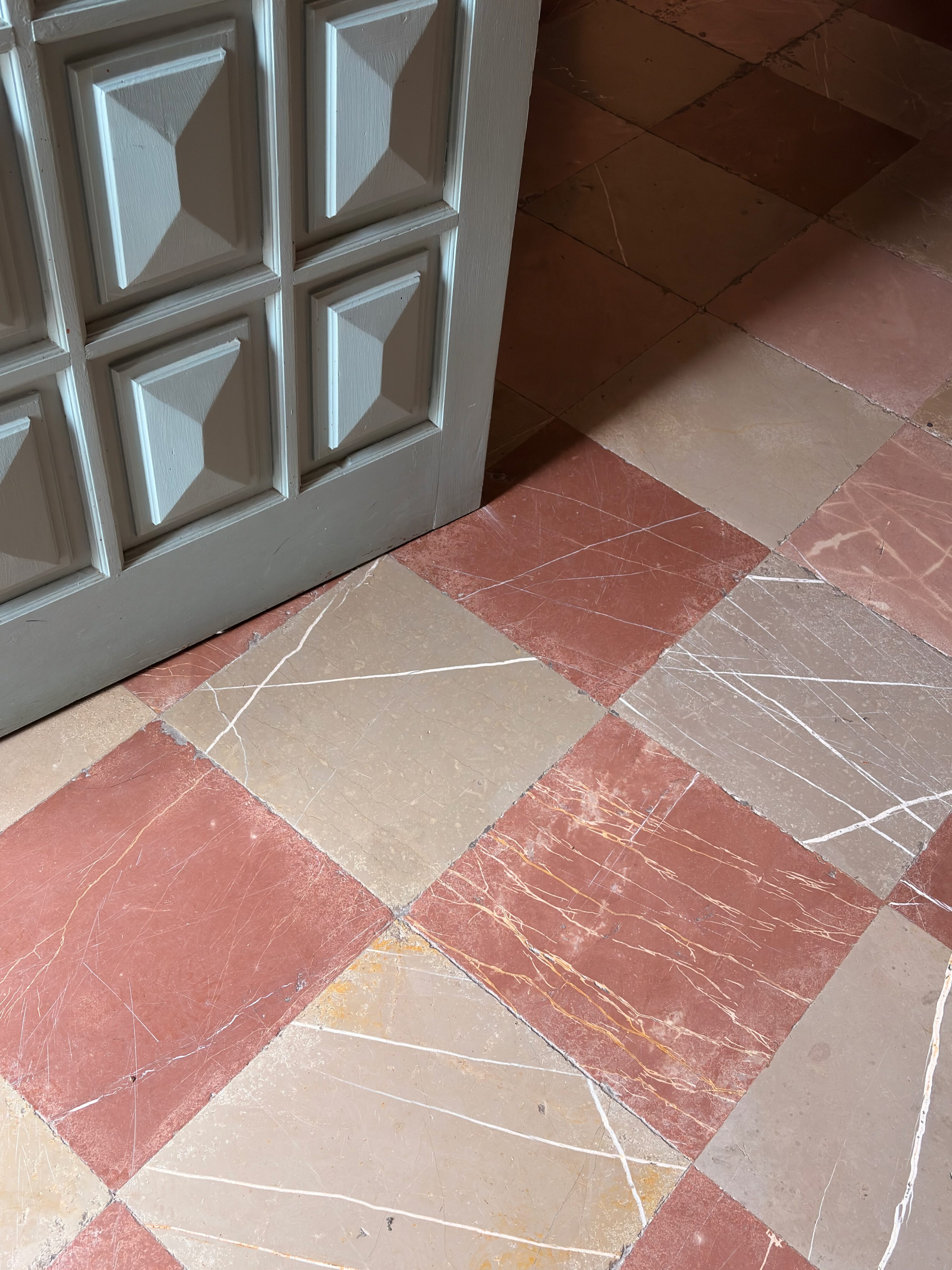
Inside the Church of St Blaise, it was a much smaller detail that held my attention. The doors were painted a soft green I’d call sage, and the marble floor beneath them was chequered in white and the palest pink. I loved how those colours sat together. After the views from the walls and the grandeur of the staircases, that quiet combination of painted wood and marble was the detail I found myself thinking about on the way back to the ship.
Dinner at Sakura
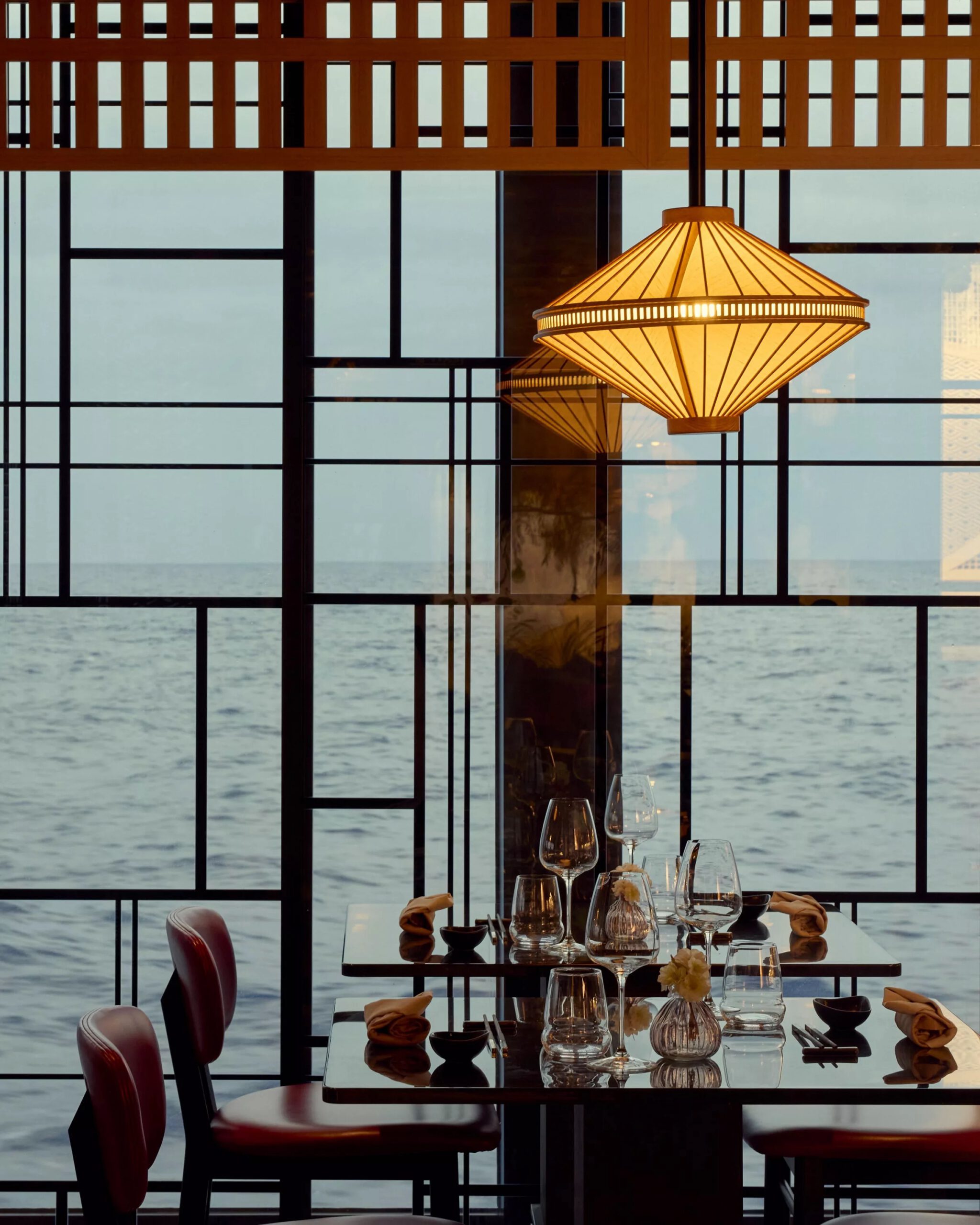
Back aboard Explora II after my walk through Dubrovnik, I had a table booked at Sakura and settled in for another excellent three-course dinner. Japan is the starting point here, from the cherry blossom that gives the restaurant its name to the sushi and sake, but the menu also draws on Thai, Vietnamese and Malaysian cooking. That breadth is one of Sakura’s strengths. There’s room for the delicacy of freshly prepared sushi alongside the brighter, bolder flavours of Southeast Asia. The dining room has a contemporary feel, with Japanese design touches and broad windows looking out to sea.
After dinner, I caught another wonderful show, then rounded off the evening at the bar. One glass of champagne turned into two as I got chatting with some lovely fellow passengers. After spending most of the day on my own with the camera, I was happy to spend the last part of it in good company.
Kotor, from Morning Mist to Mountain Light
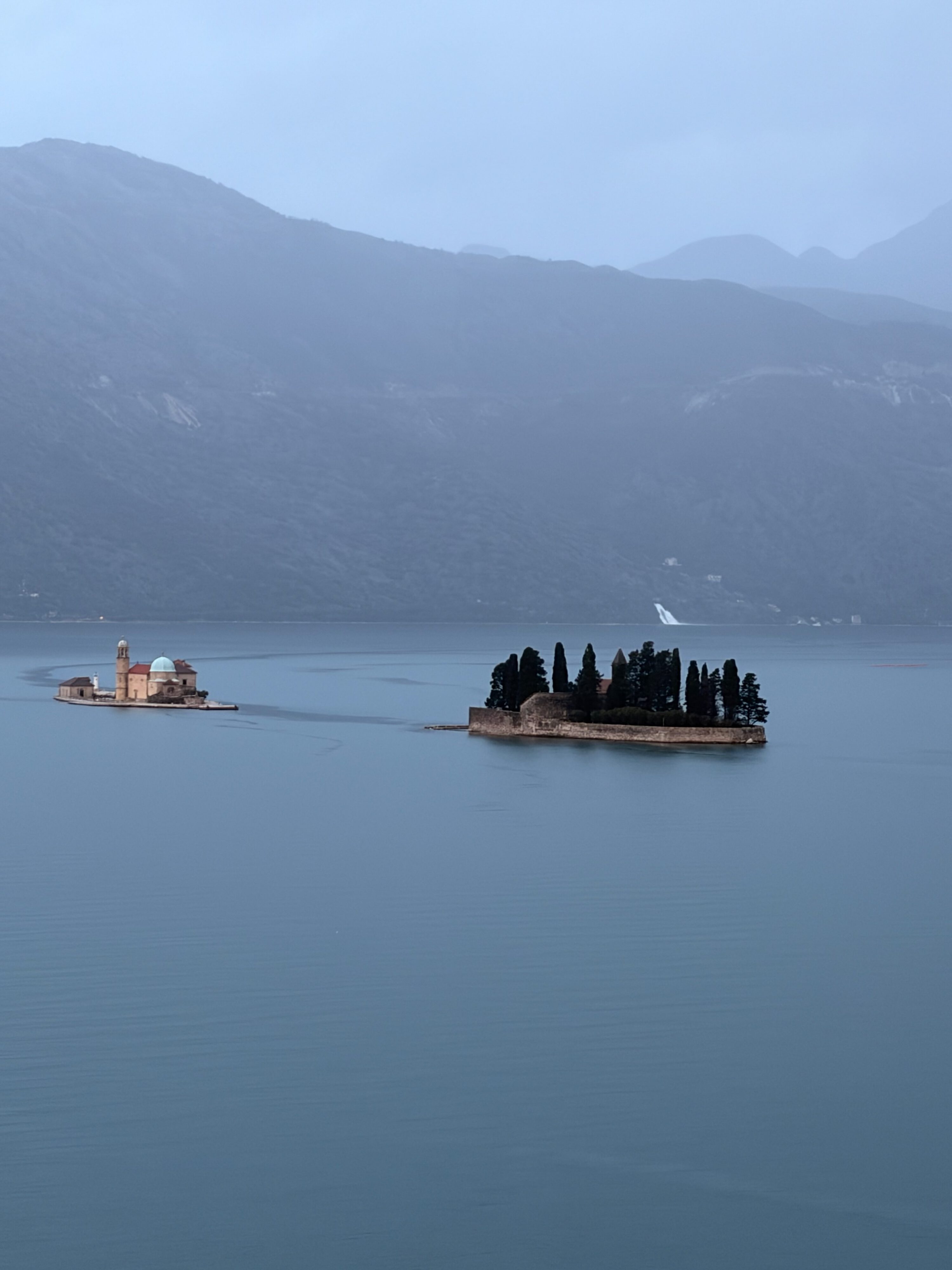
I got up early to watch Explora II sail into the Bay of Kotor. It was misty and drizzling, but a few of us had ventured out on deck all the same. The mountains came into view in layers, their outlines fading into the low cloud. There was something almost otherworldly about the bay at that hour, with just enough light to make out the shoreline and very little sense of what lay beyond the next bend.
As we passed through the Verige Strait, the narrow passage into the inner bay, it was slowly getting light. Off the starboard side, two small islands emerged from the mist near Perast. One was Our Lady of the Rocks, a church on an island built up over generations by local sailors. Beside it was St George, a natural islet with a Benedictine monastery tucked among cypress trees. I was glad I’d set the alarm.
Through the Old Town and Up to the Fortress
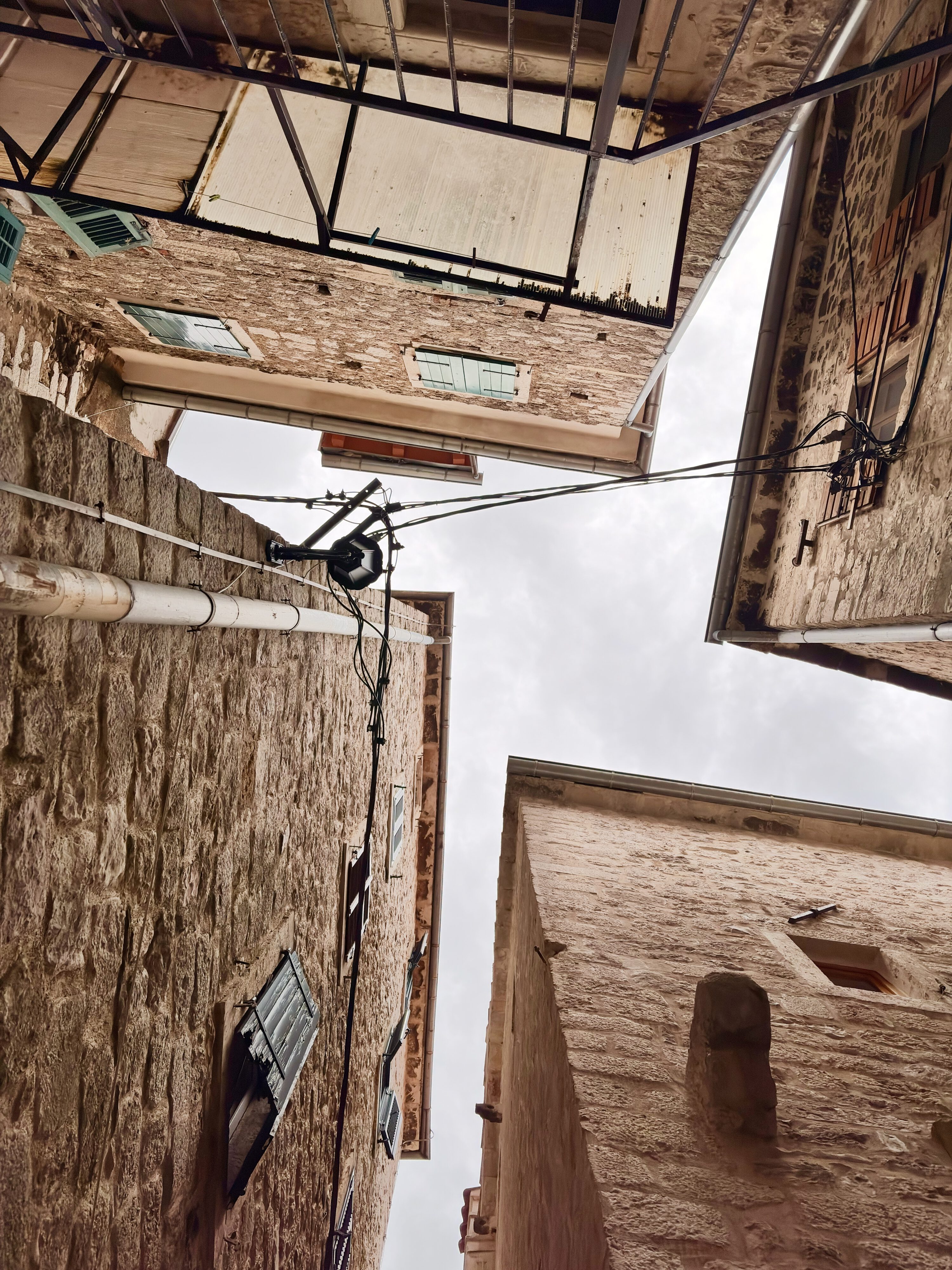
Once ashore, I wandered through Kotor’s Old Town, where a narrow lane can turn twice in the space of a few houses and then open unexpectedly into a square. Kotor grew into a prosperous medieval port, hemmed in by the bay and the steep mountainside. Its streets took shape over centuries within the confines of the walls, threading between churches, houses and small squares as the town developed. Centuries of Venetian rule left their mark on the palaces and fortifications, while the winding street plan still gives you a sense of the medieval town.
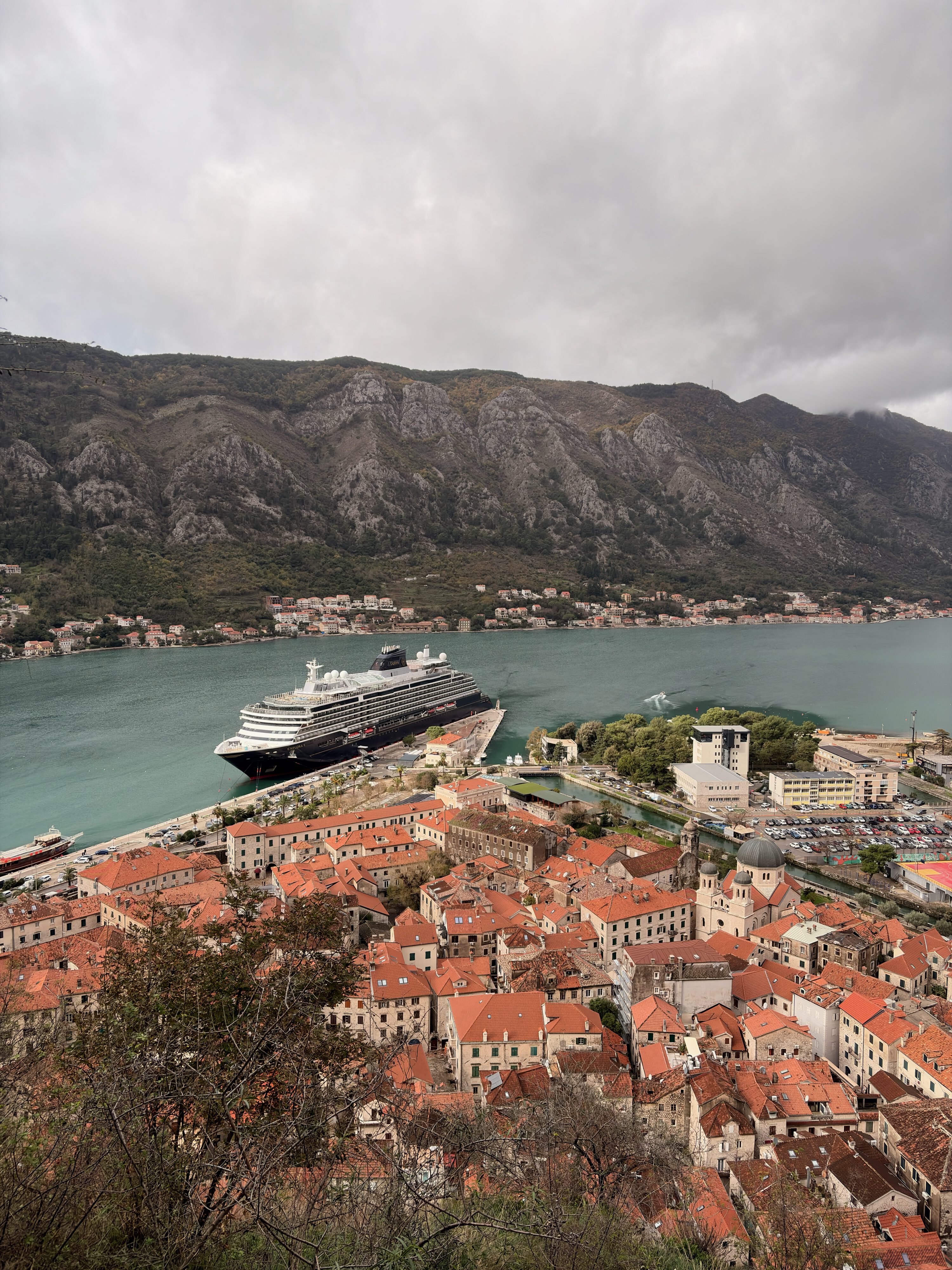
From the lanes I took the steep climb to St John’s Fortress. The higher I went, the clearer it became how little space the town had to grow. The roofs were packed tightly below me, the harbour sat just beyond the walls, and the bay stretched away between the mountains. I stopped often to take in the view and made it back aboard just before the rain came down in earnest.
Back Ashore for the Last Light
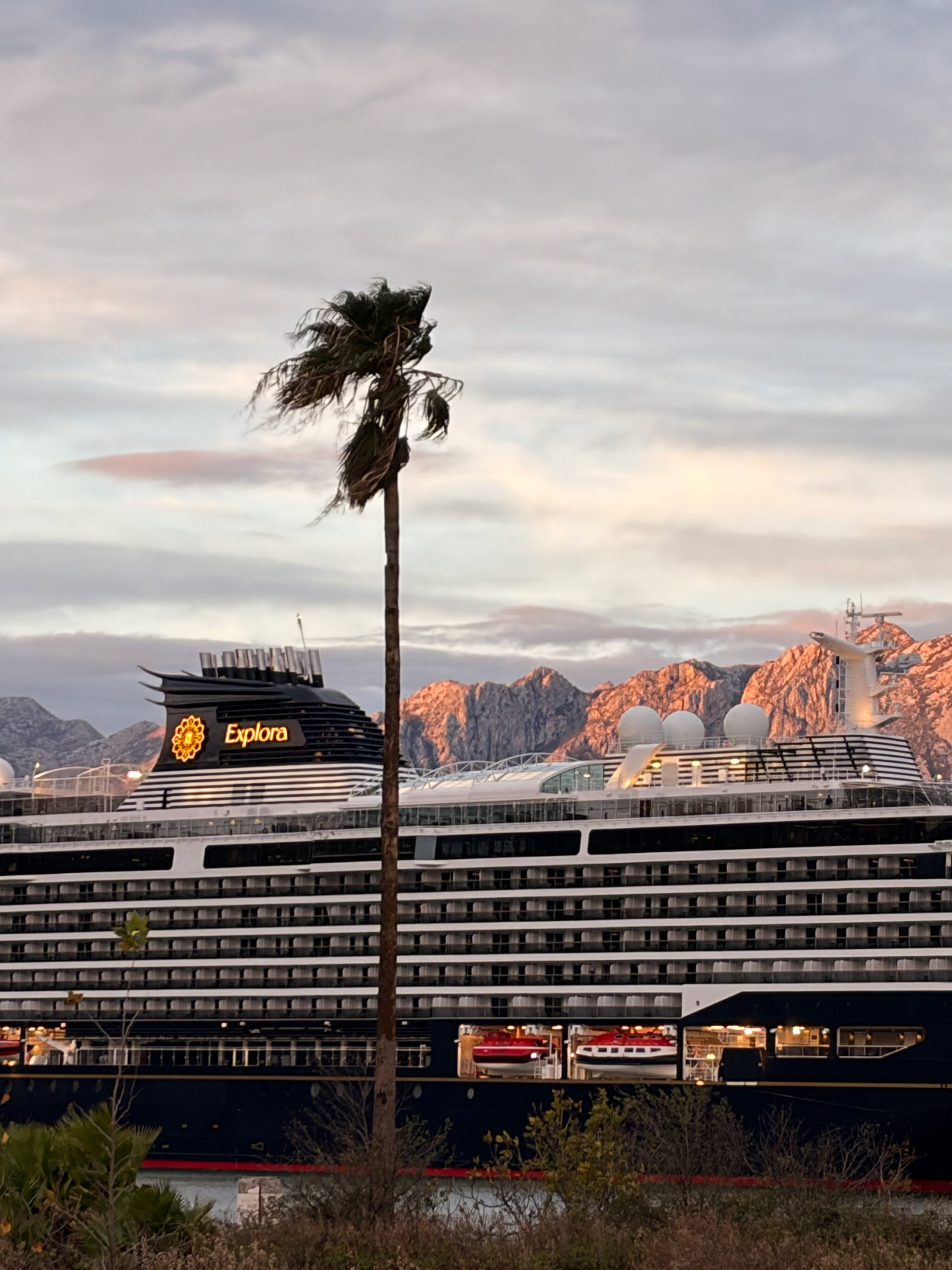
I took my time over afternoon tea on board, then went ashore again with my camera. By sunset, the mountains behind Explora II were glowing red. In the morning I’d stood on deck watching the landscape come slowly into view. Now I was looking back from shore, with the ship in the foreground and the last of the light on the slopes behind it. I was glad I’d gone out twice.
From Brindisi to Alberobello
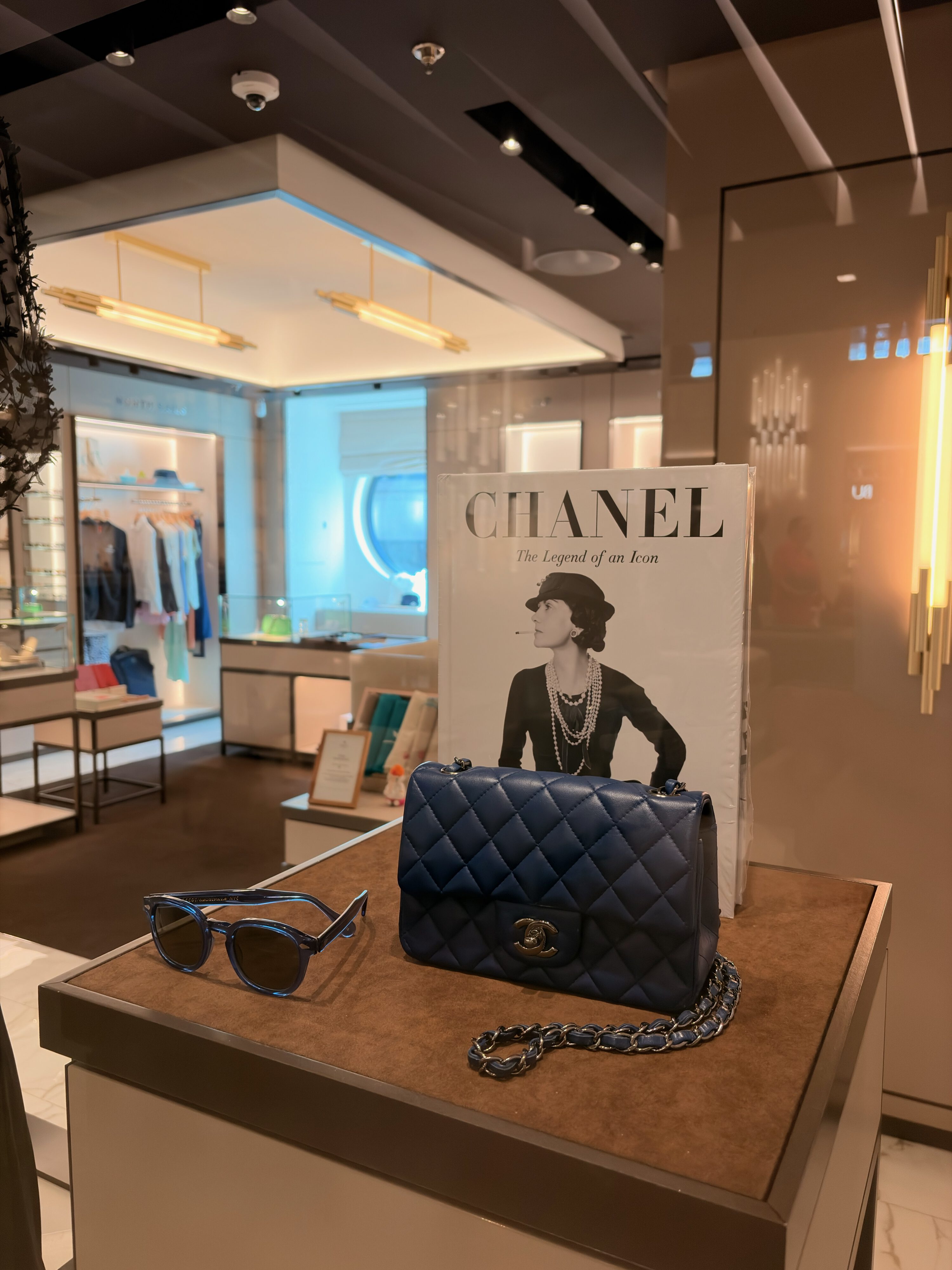
After breakfast in Brindisi, it was time to say goodbye to Explora II. Five nights had been enough to find my favourite corners. I’d found myself out on the sun decks whenever the weather allowed, and I’d loved having a terrace of my own for a quieter look at the sea. The ship’s understated interiors felt as much like a contemporary hotel as they had when I first stepped aboard. And the evenings had found an easy rhythm of their own, from dinner at Fil Rouge, Med Yacht Club or Sakura to a show in the Explora Lounge and, often enough, a conversation over a drink at the bar.
One Last Walk in the November Sun
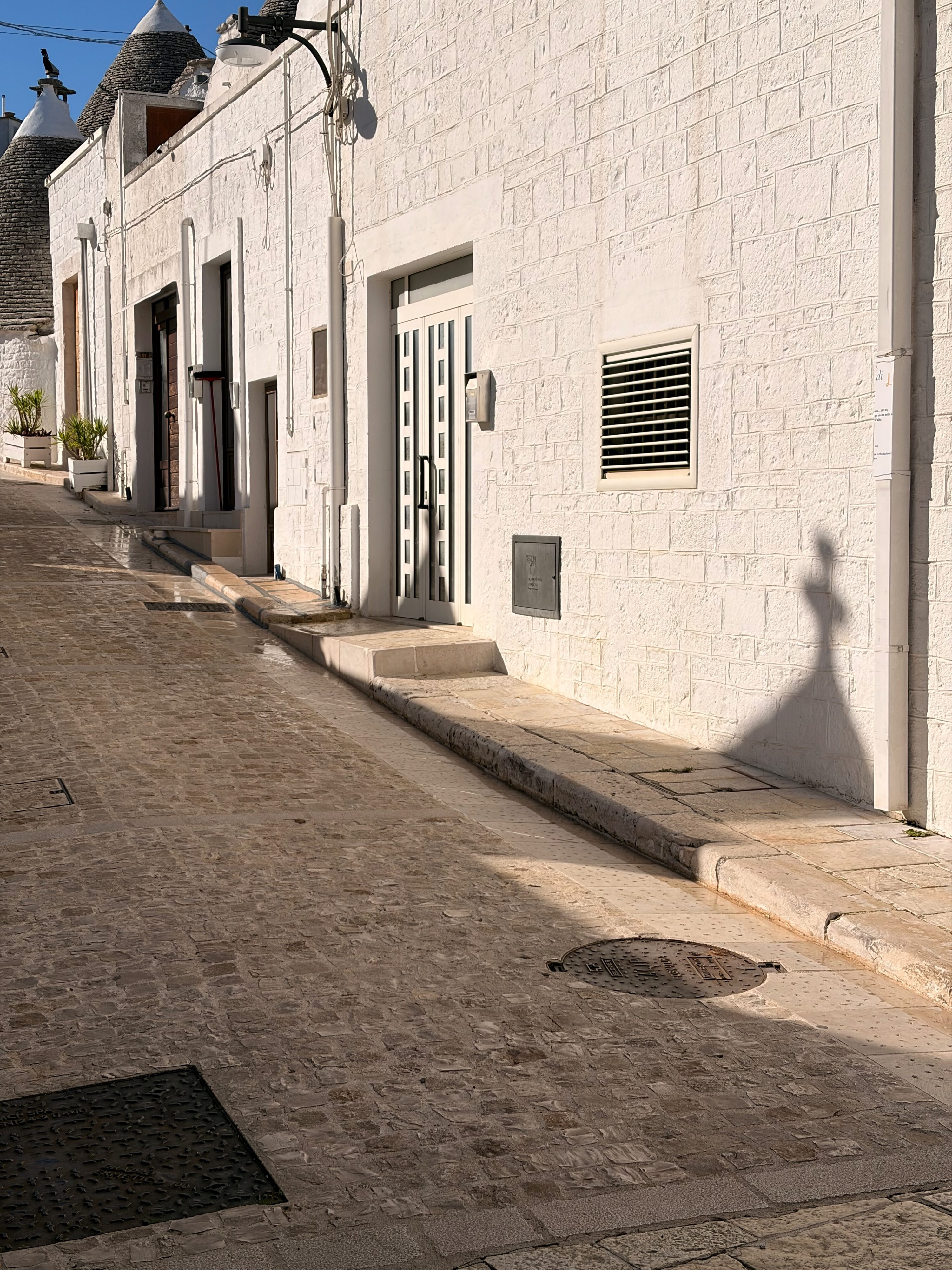
There was one more stop before the journey was over. After disembarking, I joined an excursion to Alberobello, which greeted us with 14°C and brilliant sunshine. It was livelier than the other places we’d visited, though there was still plenty of room to wander. The streets and shopfronts were being dressed for Christmas, and above them rose the grey stone cones I’d come to see.
The trulli are traditional limestone buildings found across Puglia’s Itria Valley, where they served as field shelters, storehouses and homes. The tradition goes back centuries, with examples dating to the mid-fourteenth century. What makes Alberobello remarkable is how many survive together. More than 1,500 are clustered in the historic quarters of Rione Monti and Aia Piccola, where a building type once scattered across the countryside gives whole streets their shape.
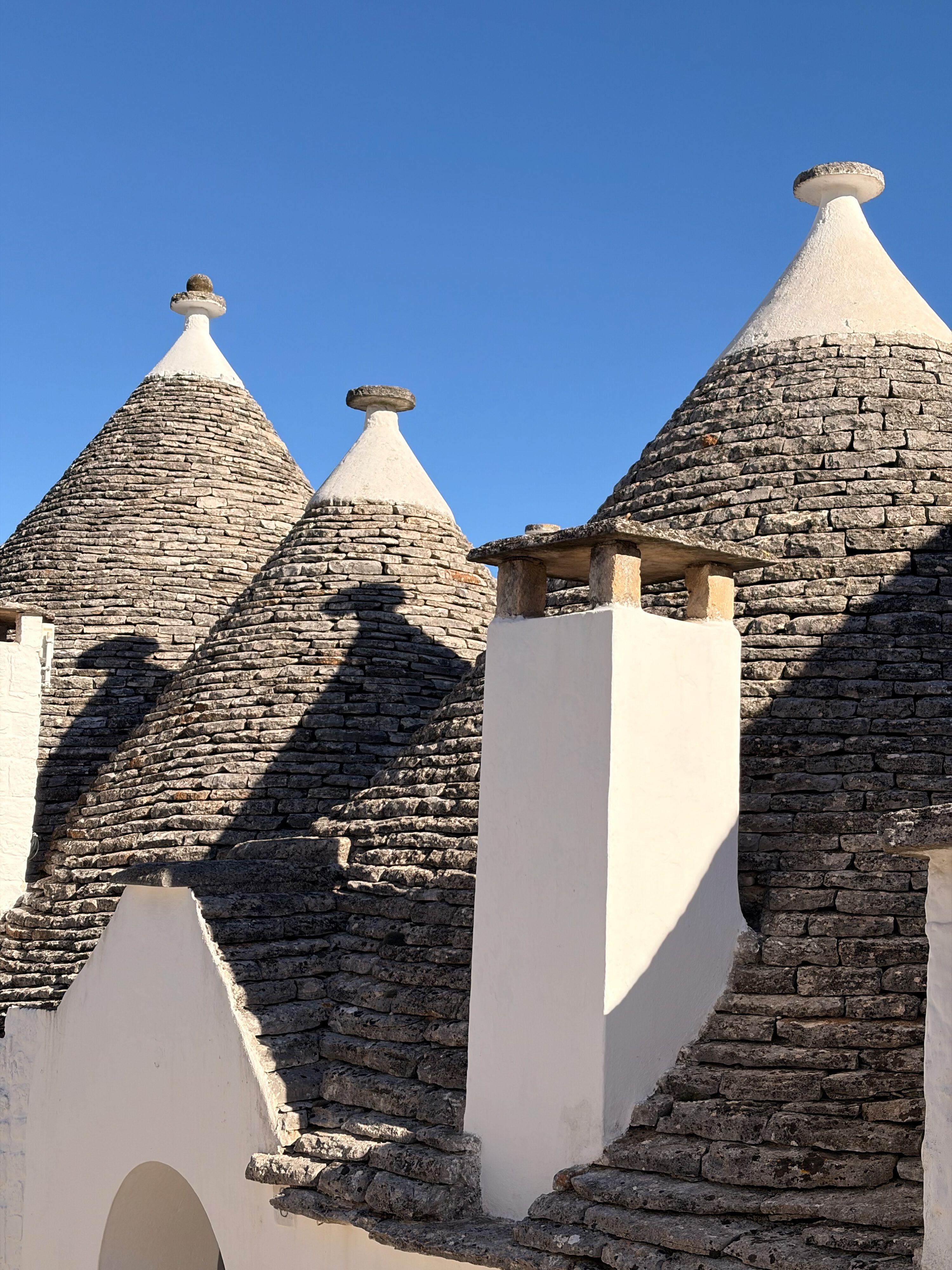
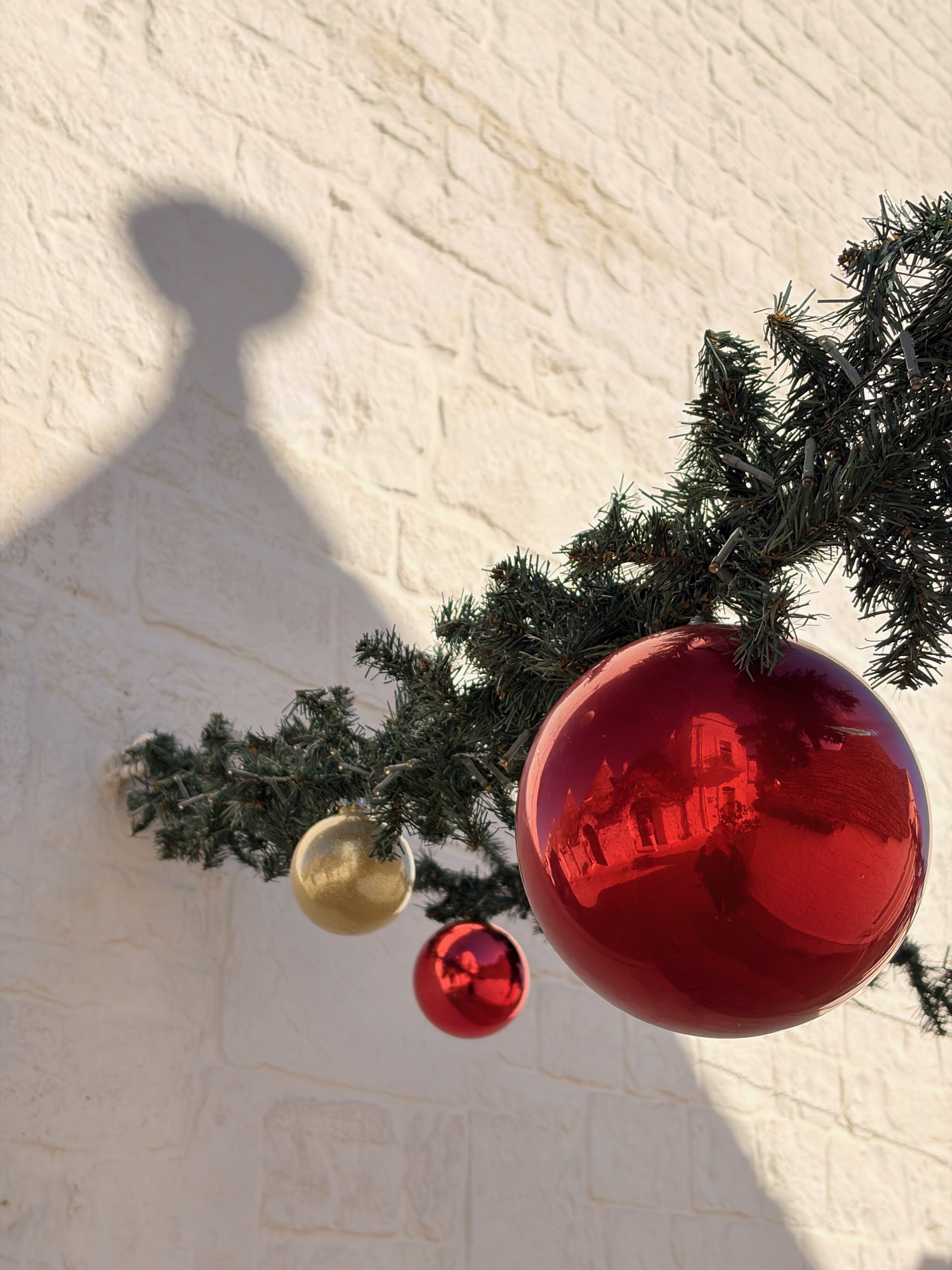
The builders used local limestone and laid it without mortar. To form the roof, they set each successive ring of stone a little further inwards until the opening closed. An outer layer of overlapping limestone slabs, known as chiancarelle, sheds the rain. Many roofs end in a carved stone finial, and some carry painted symbols. From a distance, it’s the repetition of those grey cones that catches the eye. Up close, there’s a surprising amount to look at in a single roof.
I spent the rest of my visit drifting from one street to the next with my camera. The low November sun picked out the edges of the roof tiles and sent long shadows across the whitewashed walls. There was a little of Mykonos in the way I kept stopping for the shadows, even though the shapes here were entirely different. I came away with another set of photographs I was looking forward to going through. It was a lovely way to end the trip, with enough time to turn one more corner and enough light to see what was there.